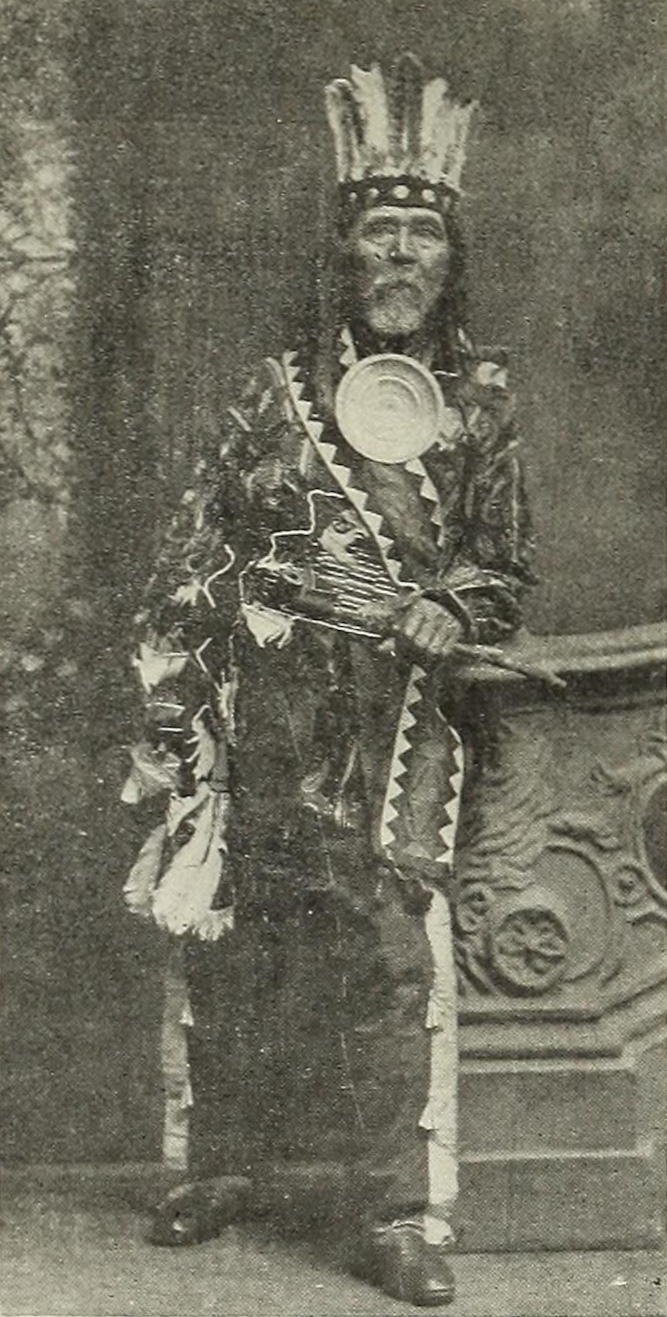
Historical portrait of Andrew J. Blackbird, published by 1897Photographer unidentified · Andrew J. Blackbird, Complete both early and late history (1897) · Duke University Libraries / Internet Archive via Wikimedia Commons · Public domain
Explore Ottawa/Odawa histories through the Ottawa Tribe of Oklahoma’s own account and the Little Traverse Bay Bands’ selected Waganakising history. These distinct community scopes matter. A selected first-person passage by Odawa author Andrew J. Blackbird provides another attributed historical voice.
See each region’s evidence for historical or present-day scope.
Homeland / region
Great Lakes / Canada / United States
Research depth
Source guide
Source collection
7 annotated resources · 5 Indigenous-led
Inspected sources
3 substantive works · selected content reviewed
Initial adequacy
Still unfinished
Source review
October 27, 2026
A source guide for a deeper dive.This entry provides a brief orientation and an organized reading path. A comprehensive deep dive has not yet been completed. Follow the annotated sources and distinguish primary community accounts from outside reference material.
Still unfinished
A bounded reading route with inspected content and a specifically explained visual. It does not establish a complete history, separate nation count or community endorsement.
Assessment recorded October 27, 2026. This is separate from research completion and community review.
Broaden direct Odawa community histories, including Canadian communities, without treating an individual government as the whole people.
Read the full LTBB book, Blackbird editions and language materials before extending the selected-page synthesis or a universal language claim.
Original Odawa Area Scouting link is retained as an unassessed lead; Indigenous authorship and direct community-history scope have not been established. It is excluded from the curated guide.
No present population, enrollment, border, legal-rights or treaty-implementation conclusion follows from these readings. No community review or endorsement is recorded.
Backdrop images & credits
These images have individual, documented connections to this entry. Their captions and source records define the people, place, object, and period shown; no one image represents every community within a broader label.
Historical portrait of Andrew J. Blackbird, published by 1897 Photographer unidentified · Andrew J. Blackbird, Complete both early and late history (1897) · Duke University Libraries / Internet Archive via Wikimedia Commons · Public domain
A named Odawa author’s historical portrait, not every Ottawa/Odawa community, a current government or an interpretation of clothing. Exact Commons item identifies Chief Andrew Jackson Blackbird and cites the 1897 book; Internet Archive metadata confirms Harbor Springs, Michigan, Babcock & Darling, 1897 and Duke University Libraries. This is the complete available 667×1317Commons extracted portrait; the original archival book page was not visually inspected. Commons extraction may omit page margins/caption. No new crop, generation, retouching or colorisation. Proportional web resizing/recompression and CSS display crops/overlays are documented separately. Exact complete available JPEG copied unchanged. CSS crops/overlays affect display only.
Image, association, and reuse record reviewed 2026-10-27.
Full images are displayed proportionally above. A translucent background copy may be cropped by the viewport; it does not replace the complete image or its record.
The visual treatment does not change the research status, evidence, or remaining gaps recorded in this profile.
Start reading here
A wider Ottawa/Odawa reading route across specifically named communities and authors; it is not one government or a universal account.
Compare Blackbird’s selected first-person historical recollection; the rest of his book remains outside the reviewed scope.
These are selected starting points. The full annotated collection, source perspectives, inspection limits and remaining research questions follow below. A starting guide is not an exhaustive history or community endorsement.
01
Identity and context
Odawa is a community name used alongside Ottawa. Distinct Odawa nations and communities have different histories.
Focus the next stage of research on: Anishinaabe relationships, language, homelands and individual governments. The sources below are selected reading paths; their authorship, dates and community scope should guide how they are used.
The Ottawa Tribe of Oklahoma describes its own wider Anishinaabe relationship and homelands. The 2005 Little Traverse Bay Bands publication limits its later account to Waganakising bands, including Beaver Islands. Read their differences as part of the history.
The selected Blackbird passage recalls travel and hospitality at a Tittabawassee riverside camp. The portrait identifies that author; his retrospective account is one voice and is not a census of river communities or a present-government record.
Broaden direct Odawa community histories, including Canadian communities, without treating an individual government as the whole people.
Read the full LTBB book, Blackbird editions and language materials before extending the selected-page synthesis or a universal language claim.
Original Odawa Area Scouting link is retained as an unassessed lead; Indigenous authorship and direct community-history scope have not been established. It is excluded from the curated guide.
No present population, enrollment, border, legal-rights or treaty-implementation conclusion follows from these readings. No community review or endorsement is recorded.
Selected actual-content works support a bounded starting guide. Earlier source objects retain their original review dates and limits. Reused URLs, images and identity-only checks are not new global historical works. Full history and community review remain open.
Follow the reading path
Sources & further reading
Open any title to read the original source. Annotations explain what each link can help you explore.
No Indigenous-led source is identified in this entry yet. This is a gap in this collection, and does not imply an absence of community knowledge or organization.
Community or Indigenous-organization perspective linked for this entry. Use “Ottawa History — Adawe Cultural Center” to begin with the publisher’s own account; check whether its scope is one community or a wider people.
Community or Indigenous-organization perspective linked for this entry. Use “About Odawa Area – Odawa Area Scouting” to begin with the publisher’s own account; check whether its scope is one community or a wider people.
Community or Indigenous-organization perspective linked for this entry. Use “Language Resources — https://ottawatribe.gov/” to begin with the publisher’s own account; check whether its scope is one community or a wider people.
The Tribe identifies itself as a sovereign nation within wider Anishinaabe peoplehood and describes Great Lakes, Ohio Valley, Kansas and Oklahoma connections. This short account is one nation’s perspective, not a universal Odawa chronology.
Inspection: Content reviewed for the stated scope
Scope: Actual About Us and Ottawa Tribe of Oklahoma paragraphs, web lines 16–21 read. Linked histories, artifacts, classes and treaties were not reviewed.
Supporting language-resource directory. It links learning programs and an 1887 John Early journal; those linked resources, recordings and files were not inspected here.
Inspection: Supporting or limited review; see scope
Scope: Actual language-resource explanatory body, web lines 87–111 read. No linked course, Facebook group or journal PDF inspected.
Review recorded: October 27, 2026
Counting note: Supporting resource directory; excluded from the curated substantive reading list.
Publication: November 2005; cover says compiled and printed then, not the 2021 upload date
A tribal project combining documents and elder interviews, with youth participation. Its own introduction limits later history to Waganakising bands, including Beaver Islands, and distinguishes shared identity from specific belonging. Selected pages only; neither a full-book review nor current legal interpretation. Historical vocabulary and family records are not replicated.
Blackbird’s first-person recollection describes winter travel and hospitality at a Tittabawassee riverside camp. It is a named Odawa author’s retrospective account, not an ethnic census of every camp.
Inspection: Content reviewed for the stated scope
Scope: Title/front matter and selected citizenship-journey passage on PDF pages 42–43, marked printed pages 60–61, read. The rest of the 140-page PDF and its language material were not reviewed for this entry.
Related entries may represent alternate names, constituent communities, wider groupings, or historical connections. Read the naming notes before treating entries as equivalent.
Robey’s Atlas of Indigenous North America · Compiled October 19, 2026 · Ottawa (Odawa)