Named people / Wichita-affiliated historical community · Added to the original list
Waco
Waco names a historical people whose individual identity remains visible within Wichita-affiliated history. Carolyn Garrett Pool’s focused account and the Wichita and Affiliated Tribes’ own connected narrative provide a starting path. This route does not create a separate present-day Waco government or treat every affiliated people as another name for the same community.
See each region’s evidence for historical or present-day scope.
Homeland / region
Southern Plains / historical Texas connections
Research depth
Source guide
Source collection
3 annotated resources · 1 Indigenous-led
Inspected sources
2 substantive works · selected content reviewed
Initial adequacy
Still unfinished
Source review
October 27, 2026
Names & relationshipsThe Wichita and Affiliated Tribes’ own historical account includes Waco among its named peoples. This separate reading route preserves the individual name within that broader context; it does not assert a separate present-day tribal government.
A source guide for a deeper dive.This entry provides a brief orientation and an organized reading path. A comprehensive deep dive has not yet been completed. Follow the annotated sources and distinguish primary community accounts from outside reference material.
Still unfinished
A bounded historical-community starting path with selected actual-content works, attributed perspectives and explicitly scoped imagery. No fixed source minimum, comprehensive completion, current subgroup government or individual descent is claimed.
Assessment recorded October 27, 2026. This is separate from research completion and community review.
Compare removal, village and allotment accounts with original records and Waco family/public community histories.
The article’s late-twentieth-century identity observation is dated, not a present membership survey.
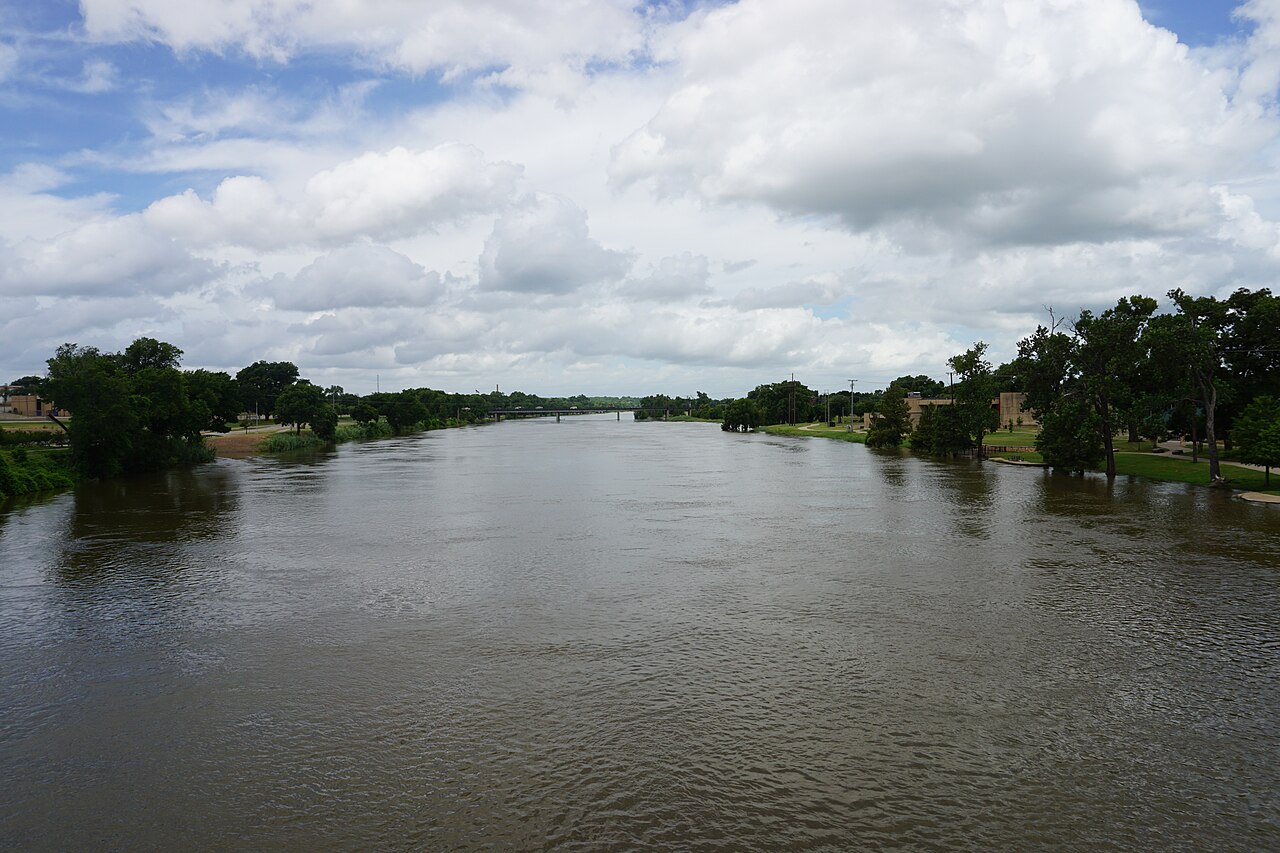
The river photo supplies place context, not ownership, a village boundary or current cultural-site identification.
Backdrop photographs & credits
These photographs have individual, documented connections to this entry. Their captions and source records define the people, place, object, and period shown; no one photograph represents every community within a broader label.
Brazos River at Waco, 2016 — modern place context Michael Barera, 2016-06-25; Wikimedia Commons. CC BY-SA 4.0 (selected from the offered licenses).
Modern local river context. The municipal history locates Indian Spring Park on the Brazos and records the public commemoration of Waco campgrounds; the image record identifies the actual river at Waco. This is not an intact Waco village, proof of ownership of all visible banks, a community-endorsed cultural-site depiction, a pre-removal view or a surveyed boundary. No visible bridge is treated as Indigenous construction. Private candidate is a byte-for-byte copy of the inspected full-frame display JPEG. Root may make proportional card/page resizes with dimensions/hash and change note. Preserve photographer/source/license credits and any ShareAlike obligation for photographic derivatives; disclose display-only CSS crops or overlays. No source-count increment or endorsement. Exact available full-frame JPEG copied unchanged; CSS crops and overlays affect card/backdrop display only.
Image, association, and reuse record reviewed 2026-10-27.
Full photographs are displayed proportionally above. A translucent background copy may be cropped by the viewport; it does not replace the complete image or its record.
The visual treatment does not change the research status, evidence, or remaining gaps recorded in this profile.
Start reading here
Historical people/community grouping; broader Caddo or Wichita access points are related reading. No automatic subgroup identity is assigned to an umbrella source, historical picture or current government.
Compare the article with the Tribe-published connected historical narrative.
These are selected starting points. The full annotated collection, source perspectives, inspection limits and remaining research questions follow below. A starting guide is not an exhaustive history or community endorsement.
01
Texas places and removal
Pool places Waco communities among the Wichita on Red River and with Tawakoni communities on the Sabine in the mid-eighteenth century. Her article then follows assignment to the Brazos Indian Reservation near Fort Belknap in 1855 and removal to Indian Territory in 1859. These are the author’s historical synthesis and chronology; treaty implementation and every family’s experience require other records. The modern Brazos-at-Waco photograph is local river context, not a surviving Waco village.
The article emphasizes separate Waco villages and recognized headmen during the reservation era, even while Waco people were administratively grouped with the Wichita. Its discussion of allotment and late-twentieth-century family identification shows why a shared political framework should not erase historical names. Read that scholarly account alongside the Tribe’s own history, which explicitly includes Waco among its named peoples. Neither source establishes an individual reader’s descent or current citizenship.
Compare removal, village and allotment accounts with original records and Waco family/public community histories.
The article’s late-twentieth-century identity observation is dated, not a present membership survey.
The river photo supplies place context, not ownership, a village boundary or current cultural-site identification.
This reviewed starting guide records selected actual-content sources, their perspectives and access limits. Reused earlier reviews retain their original dates/scopes; images and repeated URLs do not create new historical works. Comprehensive history and community review remain open.
Follow the reading path
Sources & further reading
Open any title to read the original source. Annotations explain what each link can help you explore.
No Indigenous-led source is identified in this entry yet. This is a gap in this collection, and does not imply an absence of community knowledge or organization.
Scholarly referenceOklahoma Historical Society, Encyclopedia of Oklahoma History and CultureSource 1
Carolyn Garrett Pool’s focused article distinguishes Waco historical identity from the wider Wichita and Affiliated Tribes. It follows Texas locations, the Brazos reservation, removal and reservation-era villages. Its end-of-twentieth-century statement remains dated; no separate current Waco government or individual descent is established.
Inspection: Content reviewed for the stated scope
Scope: Complete main body, web lines 98–102, byline, bibliography and January 15, 2010 publication metadata read. Bibliography and original records were not separately opened; opening federal-recognition wording is not independently audited or converted into a separate Waco-government claim.
Review recorded: October 27, 2026
Access note: Actual public HTML body readable without an account in this inspection. Linked bibliography, archival instruments and media remain separate works unless expressly listed.
Indigenous-led / collaborative public historyWichita and Affiliated Tribes; exhibit collaboration credited to the Stovall Museum of Science and History and Oklahoma Archaeological SurveySource 2
Four linked chapters explain the Tribe’s historical account from early encounters through village life, displacement and continuing community. The credits identify a cooperative exhibit. Treat the chapters as one work, keep named historical groups distinct, and attribute archaeological, treaty and continuity interpretations rather than turning the narrative into independently checked archival evidence.
Inspection: Content reviewed for the stated scope
Scope: Complete main narratives of In the Beginning:1540–1750 (lines27–38), People of the Grass House:1750–1820 (27–39), Days of Darkness:1820–1934 (27–37), and A New Beginning:1934–Present (27–38), plus References and Contributors (27–91). Public narrative passages read; no quoted origin stories, ceremonial details, images or underlying bibliography reproduced or separately researched.
Review recorded: October 26, 2026
Access note: Public readable English HTML, no account/paywall encountered. Individual publication/revision dates are unstated; date ranges in titles are historical coverage, not publication dates. Do not repeat historical population estimates as current figures, infer present identities from archaeological phases, or treat institutional treaty summaries as direct readings of the instruments.
Inspected material and access routes
In the Beginning:1540–1750 ↗ — Complete main narrative; original p431-s2 URL preserved separately as a duplicate reading route.
Days of Darkness:1820–1934 ↗ — Complete main narrative; population estimates and legal interpretations not adopted as independent facts.
A New Beginning:1934–Present ↗ — Complete main narrative; ongoing cultural/community account attributed to this publisher, not a current statistical survey.
References and Contributors ↗ — Collaboration, credits and reference list inspected; cited works remain unread unless checked separately by the other research agent.
Municipal public-history context for a modern Brazos-at-Waco image. The page locates Indian Spring Park on the Brazos and describes a 1911 commemoration of Waco campgrounds. This demonstrates the city’s place interpretation, not a surveyed Indigenous village boundary, community endorsement or proof that all photographed riverbank was Waco-owned.
Inspection: Supporting or limited review; see scope
Scope: Actual selected main-body paragraphs at web lines 29 and 35–36, with January 2, 2025 update metadata read. Other visitor, sculpture and event material encountered but not adopted. Underlying city/Baylor/DAR records and images not inspected or reproduced.
Review recorded: October 27, 2026
Access note: Actual public HTML body readable without an account in this inspection. Linked bibliography, archival instruments and media remain separate works unless expressly listed.
Related entries may represent alternate names, constituent communities, wider groupings, or historical connections. Read the naming notes before treating entries as equivalent.
Robey’s Atlas of Indigenous North America · Compiled October 19, 2026 · Waco