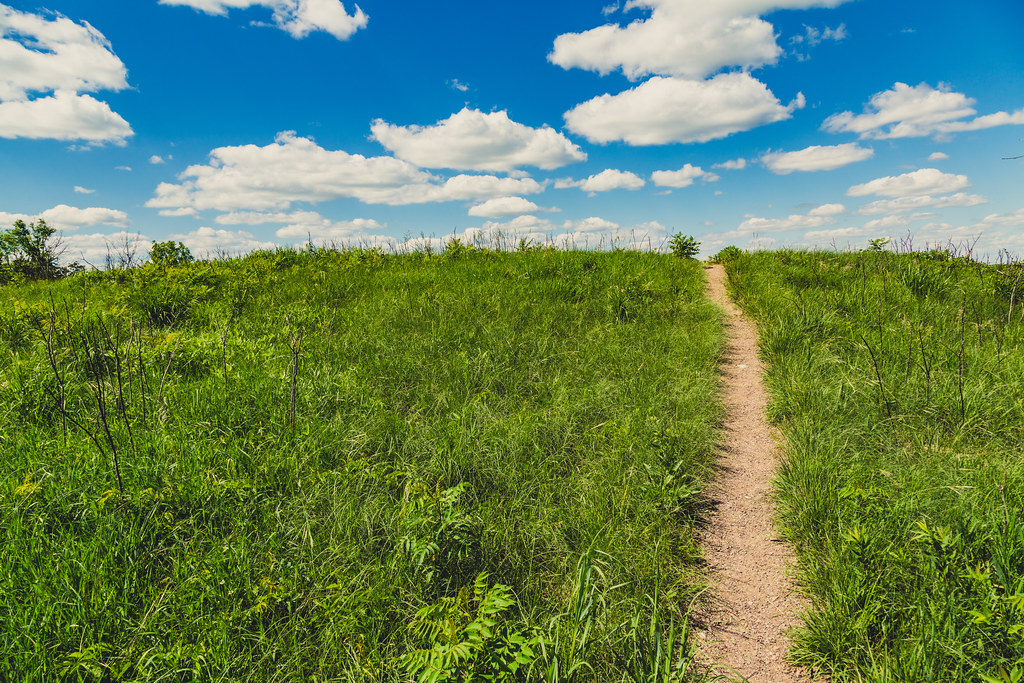
Landscape at the former Upper Sioux Agency State Park, 2017Tony Webster, 2017; Flickr / Wikimedia Commons. CC BY-SA 2.0. Photographed before the 2024 land return.
Tribal government / contemporary community · Added to the original list
Upper Sioux Community
Upper Sioux Community, also presented as Pezihutazizi Oyate, is a distinct Dakota government in the Minnesota River region. A 2025 state guide carries the Community's narrative, including its establishment, government and land return. An older first-person account provides context. Reading their dates together helps preserve continuity without treating changing figures as contradictions to erase.
See each region’s evidence for historical or present-day scope.
Homeland / region
Minnesota
Research depth
Source guide
Source collection
2 annotated resources · 0 Indigenous-led
Inspected sources
1 substantive works · selected content reviewed
Initial adequacy
Still unfinished
Source review
October 27, 2026
Names & relationshipsMnDOT explicitly places this individual Minnesota government under its Dakota Tribal Nation grouping. It remains a separate government; no automatic equivalence to Santee Dakota or another band is inferred.
A source guide for a deeper dive.This entry provides a brief orientation and an organized reading path. A comprehensive deep dive has not yet been completed. Follow the annotated sources and distinguish primary community accounts from outside reference material.
Still unfinished
A compact source-led introduction to this named community; historical breadth, local voices and outcomes remain limited. No comprehensive completion or community endorsement is claimed.
Assessment recorded October 27, 2026. This is separate from research completion and community review.
Read underlying land-transfer and constitutional records before making detailed legal claims.
Obtain broader community-published voices where access permits; the earlier government-site403 was not bypassed.
Current population, land totals, services and visitor access remain unverified; no community review is recorded.
Backdrop photographs & credits
These photographs have individual, documented connections to this entry. Their captions and source records define the people, place, object, and period shown; no one photograph represents every community within a broader label.
Landscape at the former Upper Sioux Agency State Park, 2017 Tony Webster, 2017; Flickr / Wikimedia Commons. CC BY-SA 2.0. Photographed before the 2024 land return.
A landscape explicitly identified by photographer Tony Webster as Upper Sioux Agency State Park in 2017. The previously inspected 2025 state community profile describes return of the former park lands to Upper Sioux Community in 2024; that exact place relationship supplies the scoped government relevance. The image predates the return and does not depict present visitor access, current management, a community member, a surveyed homeland boundary or a sensitive cultural site. No precise route or sensitive-place location is reproduced. The complete 1024-pixel Flickr display frame was downloaded from the actual primary page's og:image URL and visually inspected. The 5760-pixel original listed on Commons was not retrieved. No crop, retouching or generated content was applied. Keep creator, source and license link visible; disclose display crops/overlays. Keep modified photographic versions under the stated ShareAlike license where applicable. No visual-source count contributes to substantive reading-source counts.
Image, association, and reuse record reviewed 2026-10-27.
Full photographs are displayed proportionally above. A translucent background copy may be cropped by the viewport; it does not replace the complete image or its record.
The visual treatment does not change the research status, evidence, or remaining gaps recorded in this profile.
Start reading here
Named government/community route; wider Dakota or Ojibwe reading profiles remain related context rather than interchangeable identities.
Begin with the recent community profile carried in the 2025 state guide.
These are selected starting points. The full annotated collection, source perspectives, inspection limits and remaining research questions follow below. A starting guide is not an exhaustive history or community endorsement.
01
Homeland, return and government
The Community account describes homeland relationships, forced removal and return. The 2025 profile places the Community's establishment in 1938 and discusses its 1995 constitution, enterprises and services. These publications carry a community narrative through state institutions; they are not independent verification of every historical assertion. This starting selection does not establish all present laws or membership rules. The linked tribal-government website returned 403 in the original review, so its own inaccessible body is not claimed as inspected or treated as a paywall.
The 2025 profile describes the 2024 return of former Upper Sioux Agency State Park lands. A 2017 landscape photograph provides a view of that named place before the transfer, rather than an image of current access arrangements. The older Indian Affairs page and newer guide contain different acreage and population figures. Their dates and scopes are retained; neither supplies a current census or an exact Indigenous homeland boundary. Further work should follow the transfer records and Community interpretation while leaving sensitive places and cultural knowledge out of public description.
Read underlying land-transfer and constitutional records before making detailed legal claims.
Obtain broader community-published voices where access permits; the earlier government-site403 was not bypassed.
Current population, land totals, services and visitor access remain unverified; no community review is recorded.
A community-specific starting guide reuses selected earlier actual-content reviews with their original dates/scopes. It does not add new global works merely because a URL appears on this route. Picture identification/rights are separate from historical adequacy or community endorsement.
Follow the reading path
Sources & further reading
Open any title to read the original source. Annotations explain what each link can help you explore.
No Indigenous-led source is identified in this entry yet. This is a gap in this collection, and does not imply an absence of community knowledge or organization.
Government / community historical accountMinnesota Secretary of State; the profile presents the Upper Sioux Community’s accountSource 1
This two-page community profile describes the Minnesota River homeland, the community’s establishment in 1938, its 1995 constitution, tribal enterprises and services, and the 2024 return of former Upper Sioux Agency State Park lands. The state publication carries the community’s narrative; it is not an independent verification of every historical statement. Its 577 membership figure and 3,725-acre land-base statement are dated to the report and are not current 2026 measurements or an Indigenous homeland boundary.
Inspection: Content reviewed for the stated scope
Scope: Read the complete Upper Sioux Community profile, pp. 9–10 (PDF lines 347–381), including the paragraphs on homeland, 1938 community formation, governance, economic development and services, and the 2024 transfer. The remaining tribal profiles and state agency listings were not counted as Dakota-community evidence.
Government / contextual referenceMinnesota Indian Affairs Council; page uses first-person community language and links to the Upper Sioux CommunitySource 2Supporting reference · outside substantive inspected count
The page preserves a first-person historical account of homeland, forced removal, return, government formation, enterprises and services. Its undated population and acreage statements (453 people and over 900 acres) differ from the 2025 state guide’s account of a 2024 land return and 3,725-acre total land base. These figures should be read as dated versions of a community narrative rather than treated as current or as evidence of a boundary. The linked Upper Sioux government site returned HTTP 403 to the research request; no access control was bypassed.
Inspection: Supporting or limited review; see scope
Scope: Read the full historical body and its links to elected leaders and the Upper Sioux Community website (page lines 16–36). The linked community site itself was not accessible from this request; its 403 response is not classified as a reader paywall.
Related entries may represent alternate names, constituent communities, wider groupings, or historical connections. Read the naming notes before treating entries as equivalent.
Robey’s Atlas of Indigenous North America · Compiled October 19, 2026 · Upper Sioux Community