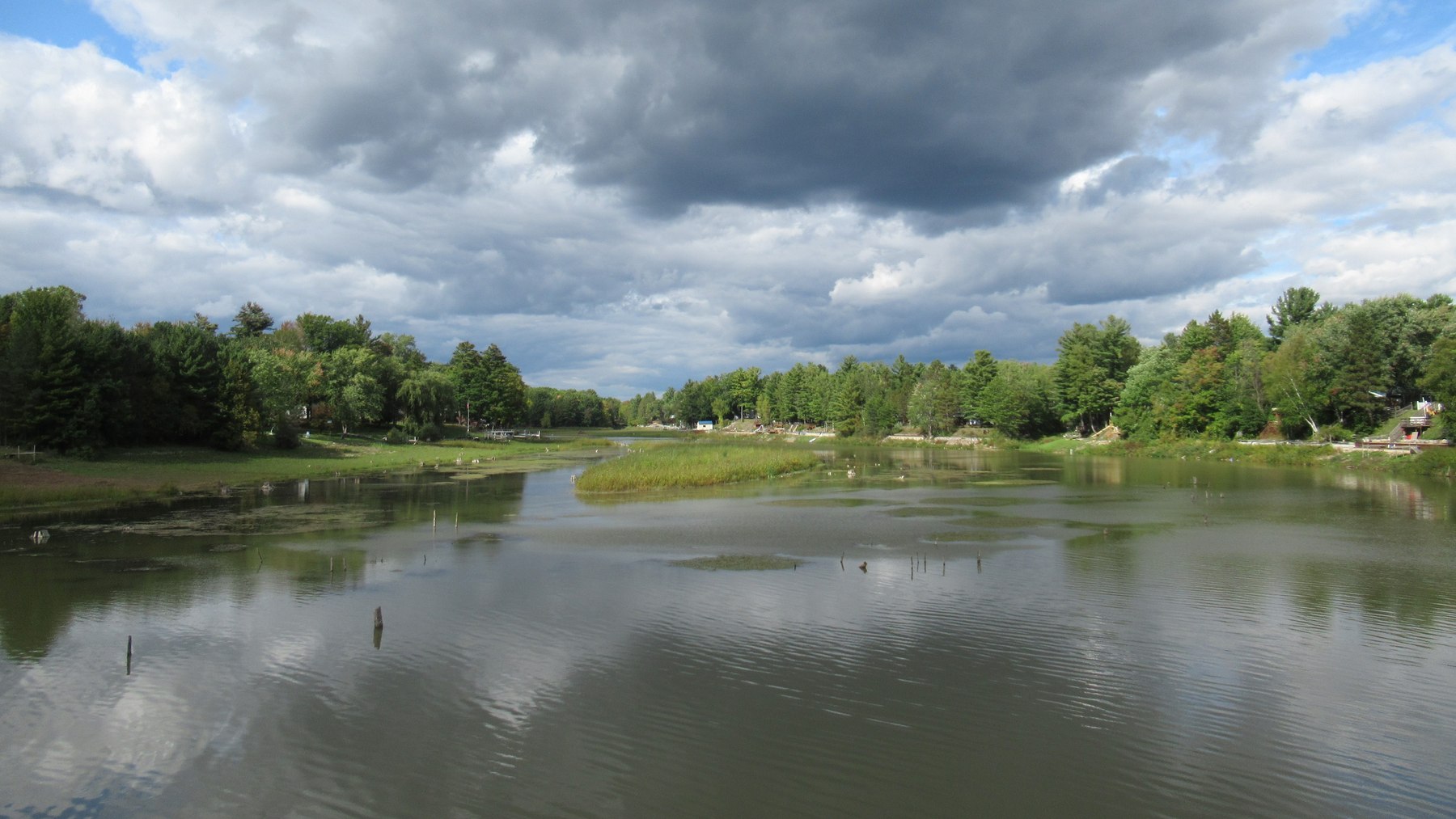
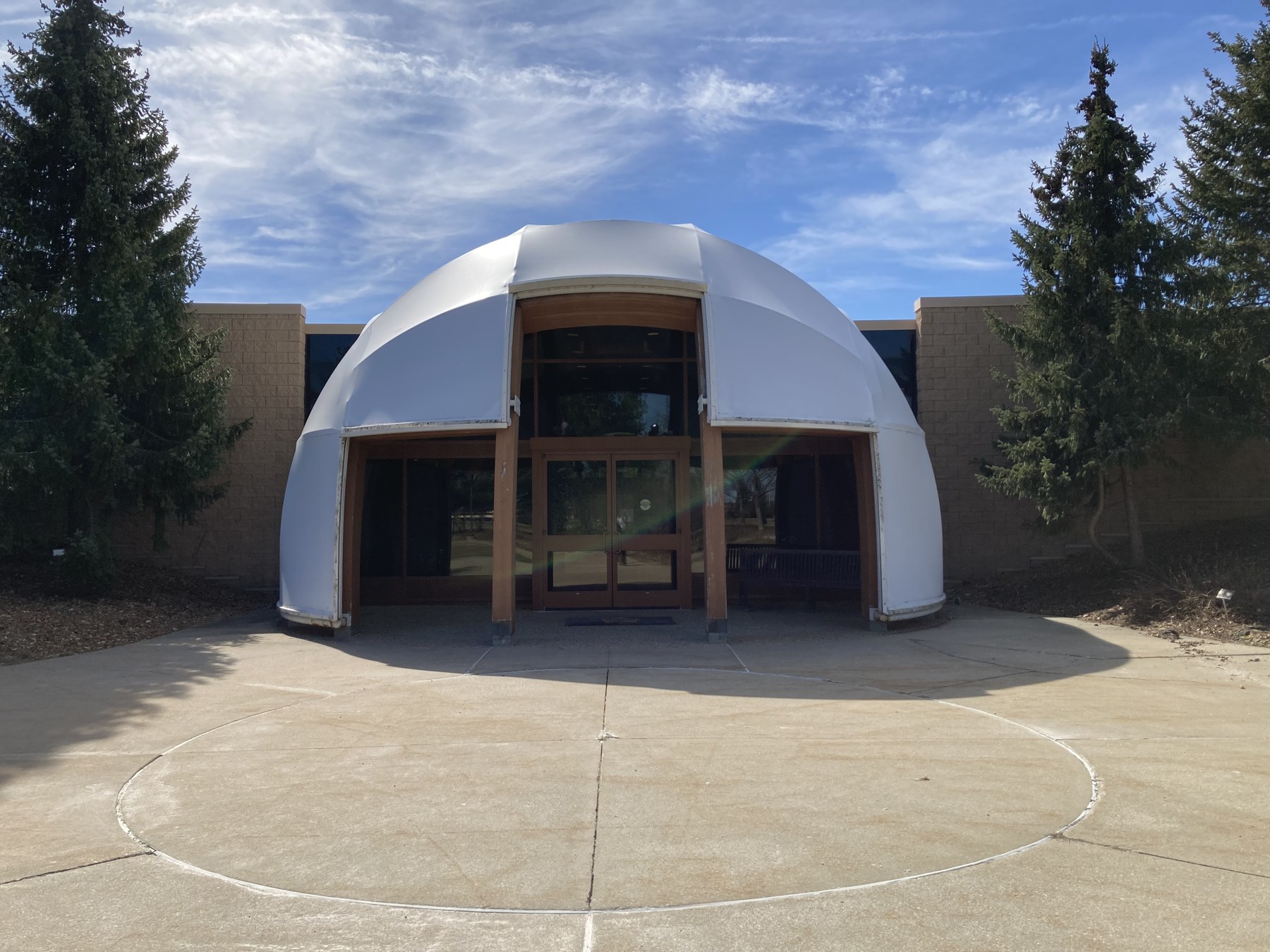
Tittabawassee River, Hay Township, MichiganTittabawassee River (Hay Township, Michigan), September 25, 2021. Photograph by Notorious4life / Wikimedia Commons, CC0 1.0.Ziibiwing Center building entrance, March2024Nathan Strait,2024 · CC BY-SA4.0
Historical / regional Ojibwe communities · Added to the original list
Tittabawassee Ojibwe communities
Also find this entry through: Tittabawassee River communities
Explore the Tittabawassee River communities through Michigan treaty records, an attributed nineteenth-century account, and Saginaw Chippewa community sources. This regional reading route is placed in Ojibwe context and does not identify a separate present-day tribal government.
See each region’s evidence for historical or present-day scope.
Homeland / region
Great Lakes / Michigan / Tittabawassee River and Saginaw watershed
Research depth
Source guide
Source collection
9 annotated resources · 2 Indigenous-led
Inspected sources
6 substantive works · selected content reviewed
Initial adequacy
Still unfinished
Source review
October 27, 2026
Names & relationshipsRelated to the broader Ojibwe reading collection and Saginaw Chippewa historical context. Historical river communities and the present Saginaw Chippewa Indian Tribe are not interchangeable labels; no exclusive descent or separate sovereign-government claim is made.
A source guide for a deeper dive.This entry provides a brief orientation and an organized reading path. A comprehensive deep dive has not yet been completed. Follow the annotated sources and distinguish primary community accounts from outside reference material.
Still unfinished
Six directly relevant works were inspected: three distinct Michigan treaty instruments, community history, a selected first-person river passage and an agency restoration account. Three additional orientation/geographic references are supporting-only. This supports a bounded initial source guide, but detailed local histories, later treaty records, Michigan language material and further community-authored evidence remain open.
Assessment recorded October 25, 2026. This is separate from research completion and community review.
Review additional Saginaw Chippewa-authored river-community histories and publicly released Michigan language material.
Inspect the 1855 and 1864 treaty texts, later policy and community testimony before extending the removal, reservation or current-rights account.
Read Fitting’s regional archaeology article and the EPA document supplied in the study before adopting their claims; they remain unread leads here.
The historical name is a regional access point, not proof of a distinct present government, a fourth constituent band or an exclusive genealogy.
The Houghton manuscript, full Blackbird book, other study URLs and project outcomes have not all been reviewed. No community review or endorsement is recorded.
Backdrop photographs & credits
These photographs have individual, documented connections to this entry. Their captions and source records define the people, place, object, and period shown; no one photograph represents every community within a broader label.
Tittabawassee River, Hay Township, Michigan Tittabawassee River (Hay Township, Michigan), September 25, 2021. Photograph by Notorious4life / Wikimedia Commons, CC0 1.0.
Photographer Notorious4life identifies this as the Tittabawassee River in Hay Township, Michigan, on September 25, 2021, and dedicates the photograph under CC0. The actual record, rights and complete 5184×2916 original frame were inspected. This is modern named-river context, not a historical village image, a depiction of particular Ojibwe residents or a territorial boundary. The complete frame is proportionally resized/recompressed to 1800×1013; cards and backdrop copies use CSS crops/overlays. No content generated or retouched; no coordinates or sensitive sites published.
Image, association, and reuse record reviewed 2026-10-25.
Ziibiwing Center building entrance, March2024 Nathan Strait,2024 · CC BY-SA4.0
Exterior of the Saginaw Chippewa Tribe’s Ziibiwing Center, a named cultural-history institution. For the historical Tittabawassee route this supplies broader Saginaw Chippewa community context, not a photographed river village, separate current Tittabawassee government, or proof of exclusive descent. Complete available 4032×3024 source frame proportionally resized to 1800×1350 and JPEG recompressed; no pixel crop or retouching. Source file preserved privately. CSS crops/overlays affect display only; creator/source/rights credit retained.
Image, association, and reuse record reviewed 2026-10-27.
Full photographs are displayed proportionally above. A translucent background copy may be cropped by the viewport; it does not replace the complete image or its record.
The visual treatment does not change the research status, evidence, or remaining gaps recorded in this profile.
Start reading here
A historical/regional river-community reading route, not a separately established present government or an exclusive descent claim.
Compare the attributed river encounter recalled by Odawa author Andrew J. Blackbird.
These are selected starting points. The full annotated collection, source perspectives, inspection limits and remaining research questions follow below. A starting guide is not an exhaustive history or community endorsement.
01
A river-community name and its scope
This is a historical and regional reading route for Indigenous communities associated with the Tittabawassee River in Michigan’s Saginaw watershed. It is not the name of a separate contemporary government established by this review. The Saginaw Chippewa Indian Tribe describes itself through three Ojibway bands: Saginaw, Black River and Swan Creek. That broader community history should not be reduced to a fourth band called Tittabawassee, or an exclusive descent claim for every river settlement.
The 1819 treaty names Little Forks and Black Bird’s town on the river printed as Tetabawasink. The January 1837 text uses Tetabwasing. Clarke Historical Library’s Houghton exhibit connects Black Bird Reservation and the 1819 treaty with the Tittabawassee–Chippewa river landscape near Midland. These records help orient the reading, but do not supply a complete settlement inventory or justify drawing precise community boundaries.
The September 24, 1819 agreement identifies Chippewa parties and reserves two 6,000-acre tracts at Little Forks and Black Bird’s town. The January 14, 1837 agreement, made at Detroit with Saganaw/Chippewa parties, lists those tracts among the lands ceded and prescribes relocation. Treaty wording is evidence of the instrument and its terms; individual experiences, enforcement and later rights require separate study.
The December 20 agreement at Flint River modifies the January treaty, including relocation and financial provisions. The two supplied 1837 links therefore represent different, related Michigan agreements. Their listed proclamation date in 1838 should not replace their treaty dates. A proposed destination does not demonstrate that all local people relocated or that their communities disappeared.
In his 1887 book, Andrew J. Blackbird recalls a winter journey seeking support for Native citizenship. He describes following the frozen Tittabawassee, finding one camp deserted and receiving food at another where women and children remained while men hunted. This is his personal recollection of a particular encounter. He does not name every host or establish a genealogy for the camps, so the episode should not become a universal description of river life.
Continuing communities, education and watershed care
The Ziibiwing Center shares the Saginaw Chippewa Tribe’s account of continuing community institutions. A U.S. Fish and Wildlife Service restoration story, framed around the 2020 settlement, describes the Tribe’s cultural use of wetlands and planned habitat work in the wider Saginaw Bay area. The Tribal College’s history offers a further community-led educational route. These sources concern particular institutions and projects, rather than one unchanging river community or a claim that planned restoration is complete.
Ojibwe language resources provide broader context, but their regional coverage matters. The Ojibwe People’s Dictionary identifies its main variety as Central Southwestern Ojibwe from Minnesota, Wisconsin and border-lakes communities. It should not be treated as a record of historical Tittabawassee pronunciation. The owner-supplied study and all 19 contributed links are retained below; only the sources with explicit inspection notes have been checked for this guide.
Review additional Saginaw Chippewa-authored river-community histories and publicly released Michigan language material.
Inspect the 1855 and 1864 treaty texts, later policy and community testimony before extending the removal, reservation or current-rights account.
Read Fitting’s regional archaeology article and the EPA document supplied in the study before adopting their claims; they remain unread leads here.
The historical name is a regional access point, not proof of a distinct present government, a fourth constituent band or an exclusive genealogy.
The Houghton manuscript, full Blackbird book, other study URLs and project outcomes have not all been reviewed. No community review or endorsement is recorded.
Added at the owner’s explicit request after reviewing sources from the uploaded study. Study text is supplementary reading, not independent verification. Source counts exclude the three supporting references and all unread leads. Treaty transcriptions are not signed manuscripts. The Blackbird excerpt is a selected passage, not a full-book content check. Modern landscape imagery supplies named-place context only. This reviewed starting guide records selected actual-content sources, their perspectives and access limits. Reused earlier reviews retain their original dates/scopes; images and repeated URLs do not create new historical works. Comprehensive history and community review remain open.
Follow the reading path
Sources & further reading
Open any title to read the original source. Annotations explain what each link can help you explore.
No Indigenous-led source is identified in this entry yet. This is a gap in this collection, and does not imply an absence of community knowledge or organization.
Indigenous-ledSaginaw Chippewa Indian Tribe of Michigan, Ziibiwing CenterSource 1
The Tribe’s own historical account identifies its three Ojibway bands and describes reservation history, reorganization and the cultural center. It supplies present-community context, not an exclusive descent chart for river settlements.
Inspection: Content reviewed for the stated scope
Scope: Complete visible chronology and prose read, especially the three-band statement and reservation/reorganization paragraphs. Ancient chronology, numerical land-loss claims and broad legal assertions are not independently corroborated here.
The treaty describes named Chippewa tracts, including Little Forks and Black Bird’s town. Read as a dated legal instrument, not a complete community history or current-rights opinion.
Inspection: Content reviewed for the stated scope
Scope: Readable transcription: date/preamble and articles 1–9, web-extracted lines 25–112, plus displayed signatures/witness headings. Original manuscript scans were not opened. Main evidence is preamble and article 2. No signed manuscript or implementation files inspected.
A Michigan/Saganaw treaty lists river tracts among lands ceded and prescribes relocation. Its terms are not proof that every person moved; read the December supplement alongside it.
Inspection: Content reviewed for the stated scope
Scope: Readable transcription, date/preamble and articles 1–7, web-extracted lines 25–100. Original scan, later articles, schedules and signature pages were not inspected in this bounded pass. Main evidence is preamble, article 1 and article 6. No signed manuscript or implementation files inspected.
This Flint River supplement changes parts of the January arrangement. It concerns Michigan Saganaw/Chippewa parties, rather than another treaty with the same generic Chippewa title.
Inspection: Content reviewed for the stated scope
Scope: Entire readable treaty transcription, date/preamble, articles 1–7, signatures and witness lines, web-extracted lines 21–80. Original manuscript scan not opened. No signed manuscript or implementation files inspected.
Blackbird’s first-person recollection describes winter travel and hospitality at a Tittabawassee riverside camp. It is a named Odawa author’s retrospective account, not an ethnic census of every camp.
Inspection: Content reviewed for the stated scope
Scope: Title/front matter and selected citizenship-journey passage on PDF pages 42–43, marked printed pages 60–61, read. The rest of the 140-page PDF and its language material were not reviewed for this entry.
An agency account connects Saginaw Chippewa wetland use with restoration planning after the 2020 settlement. It records planned work and cultural values, not verified project completion or historical village locations.
Inspection: Content reviewed for the stated scope
Scope: Complete story body, restoration overview and Tribe-specific paragraphs read. Linked restoration plan, settlement files and preserve pages not inspected. No present project-outcome, health or current legal-rights claim made.
Useful language orientation, with an explicit Minnesota/Wisconsin/border-lakes variety scope. It does not independently document historical Tittabawassee speech.
Inspection: Supporting or limited review; see scope
Scope: Visible orientation, orthography explanation and regional-scope note read; audio, individual entries and cultural galleries not inspected. Dated speaker estimates not repeated.
The college recounts its 1998 establishment and educational purpose. This is a present institutional reading route, not a direct history of the river communities.
Inspection: Supporting or limited review; see scope
Scope: Complete visible college history read. Degree offerings, enrollment, operating schedules and language outcomes not verified as current.
The library’s curatorial summary relates Black Bird Reservation and the 1819 treaty to the Tittabawassee–Chippewa river landscape. It helps orient the historical place-names; the handwritten journal remains unread.
Inspection: Supporting or limited review; see scope
Scope: Complete short exhibition page read; the Black Bird Reservation paragraph provides the geographic bridge. Linked handwritten volume and map images not inspected. Precise site directions omitted.
These collections preserve links from supplied studies and further research leads. The collection notes explain their provenance and review status. Links already used above point to their source cards. Supporting references and unread leads are excluded from the substantive inspected-source count.
Tittabawassee Ojibwe communities: history, culture and timeline · 19 links
Owner-supplied study concerning Tittabawassee River communities and Saginaw Chippewa/Ojibwe context; identity and historical claims await original-source review.
Related entries may represent alternate names, constituent communities, wider groupings, or historical connections. Read the naming notes before treating entries as equivalent.
Robey’s Atlas of Indigenous North America · Compiled October 19, 2026 · Tittabawassee Ojibwe communities