Named Tribal government · Added to the original list
Sokaogon Chippewa Community
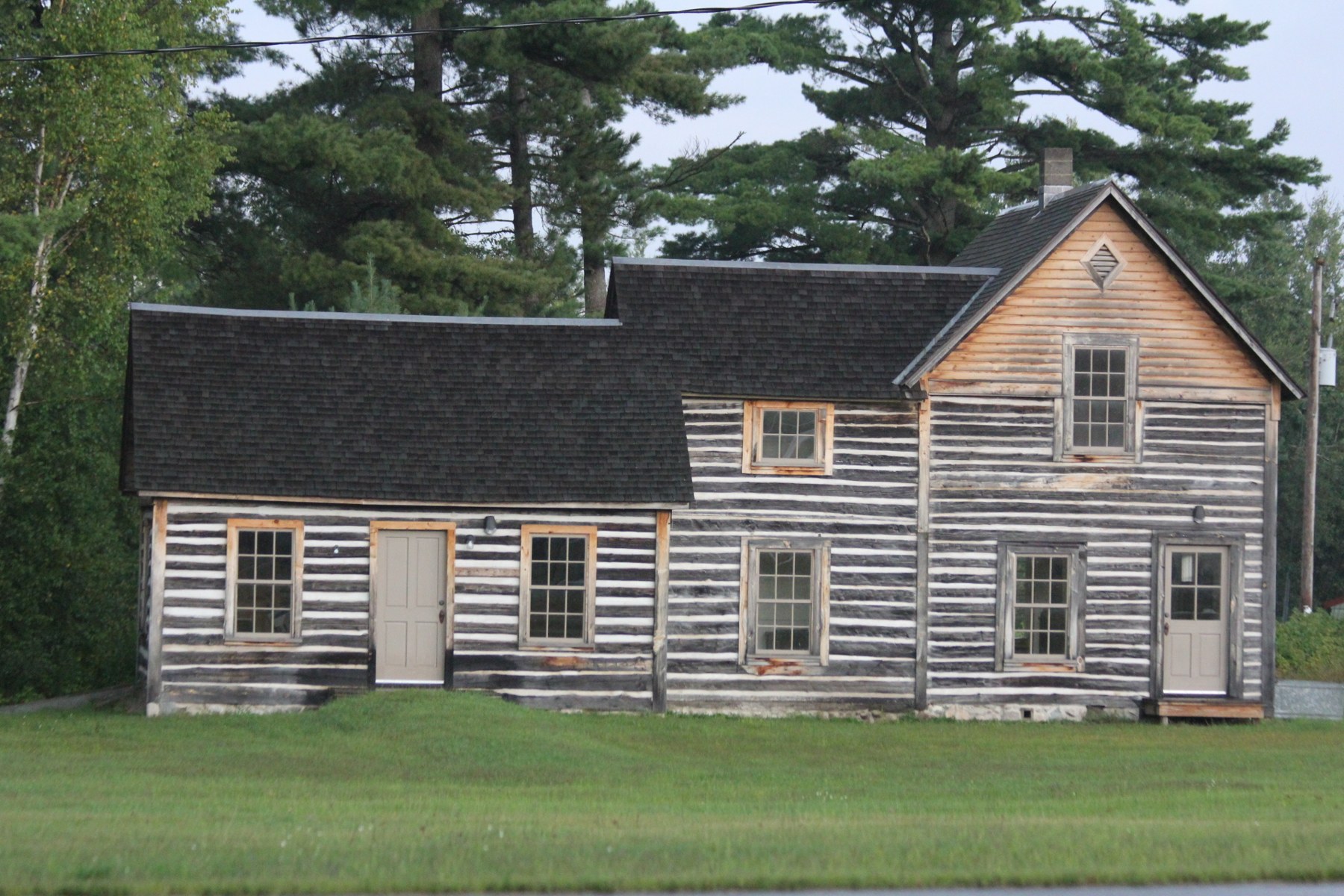
Sokaogon Chippewa Community is a distinct Ojibwe government also known as the Mole Lake Band. Its public history begins with the community's relationship to Rice Lake and manoomin, or wild rice. It recounts Chief Willard Ackley's work to secure a reservation and presents that struggle as part of the community's continued connection to its homeland. The page combines community memory, historical narrative and a recorded voice that was not transcribed in this review. EPA's 2006 water-quality case study provides a second, dated perspective. It describes the community's development of water-quality standards, monitoring and efforts to protect Rice Lake from a proposed upstream mine, including the 2003 land purchase involving Forest County Potawatomi. The official history and agency case study give differing dates and acreage for reservation establishment; this guide leaves that detail unresolved. A community-developed comprehensive plan identifies the pictured Dinesen-Motzfeldt-Hettinger Log House as a historic asset on the reservation. That former trading-post building illustrates one local historical site, not Sokaogon housing generally or the full community story.
See each region’s evidence for historical or present-day scope.
Homeland / region
Wisconsin, United States — current government listing
Research depth
Source guide
Source collection
3 annotated resources · 2 Indigenous-led
Inspected sources
2 substantive works · selected content reviewed
Initial adequacy
Still unfinished
Source review
October 27, 2026
Names & relationshipsThe state roster identifies this named Tribal Nation separately. It does not establish the full history or relationships of every broader reading label.
A source guide for a deeper dive.This entry provides a brief orientation and an organized reading path. A comprehensive deep dive has not yet been completed. Follow the annotated sources and distinguish primary community accounts from outside reference material.
Still unfinished
A bounded collection of actual selected source bodies supports a useful starting guide for this named government. It remains incomplete and does not imply community endorsement.
Assessment recorded October 27, 2026. This is separate from research completion and community review.
Resolve reservation recognition and land-purchase chronology using community-directed historical research and primary records; selected accounts differ.
Review present water standards, monitoring results and community evaluations separately from the 2006 agency case study.
Add deeper community-authored histories and language resources; the linked video and manuscript remain unread.
Backdrop photographs & credits
These photographs have individual, documented connections to this entry. Their captions and source records define the people, place, object, and period shown; no one photograph represents every community within a broader label.
Dinesen-Motzfeldt-Hettinger Log House, 2013 Royalbroil; Dinesen-Motzfeldt-Hettinger Log House, 2013. CC BY-SA 3.0. Source record and photograph license linked.
The Community-developed comprehensive plan, printed page 24, explicitly identifies the log house as a historic asset on the reservation and describes its restoration. The photo is a view of that particular former trading-post structure, not generic Ojibwe architecture or a representation of Sokaogon housing. The filename says August 2013 but the record and EXIF specify 1 September 2013; use September. The full building chronology remains outside this image review. Complete available 1920×1280 source frame proportionally resized to 1800×1200 and JPEG recompressed; no pixel crop or retouching. Original source copy retained privately. CSS crops/overlays affect display only.
Image, association, and reuse record reviewed 2026-10-27.
Full photographs are displayed proportionally above. A translucent background copy may be cropped by the viewport; it does not replace the complete image or its record.
The visual treatment does not change the research status, evidence, or remaining gaps recorded in this profile.
Start reading here
Exact named government; broader Ojibwe or Potawatomi histories and related governments remain distinct.
The Community centers Rice Lake and Chief Willard Ackley's advocacy in its own historical narrative. Reservation dates and acreage differ internally and from EPA; precise land chronology and spiritual detail are not adopted.
A dated agency case study explains community participation, water monitoring and the mine-site purchase. It complements the Community's account without establishing current water conditions, law, staffing or policy effectiveness.
These are selected starting points. The full annotated collection, source perspectives, inspection limits and remaining research questions follow below. A starting guide is not an exhaustive history or community endorsement.
01
Rice Lake in the Community account
The Community's history frames manoomin and Rice Lake as central to local continuity and recalls Chief Ackley's advocacy for a reservation. Exact reservation purchase and recognition chronology remains unresolved across the selected accounts.
EPA's 2006 account describes community discussion, water monitoring and the 2003 purchase connected to the proposed Crandon Mine. It documents one stage of Sokaogon's environmental governance, with Forest County Potawatomi as a distinct partner.
Resolve reservation recognition and land-purchase chronology using community-directed historical research and primary records; selected accounts differ.
Review present water standards, monitoring results and community evaluations separately from the 2006 agency case study.
Add deeper community-authored histories and language resources; the linked video and manuscript remain unread.
Selected actual-content works support a bounded starting guide. Earlier source objects retain their original review dates and limits. Reused URLs, images and identity-only checks are not new global historical works. Full history and community review remain open.
Follow the reading path
Sources & further reading
Open any title to read the original source. Annotations explain what each link can help you explore.
No Indigenous-led source is identified in this entry yet. This is a gap in this collection, and does not imply an absence of community knowledge or organization.
The Community centers Rice Lake and Chief Willard Ackley's advocacy in its own historical narrative. Reservation dates and acreage differ internally and from EPA; precise land chronology and spiritual detail are not adopted.
Inspection: Content reviewed for the stated scope
Scope: Actual Our History and Chief Willard Ackley body read in rendered full search content. Selected Rice Lake framing and advocacy narrative; linked manuscript and video not read/listened, battle counts and sensitive details excluded.
A dated agency case study explains community participation, water monitoring and the mine-site purchase. It complements the Community's account without establishing current water conditions, law, staffing or policy effectiveness.
Inspection: Content reviewed for the stated scope
Scope: Actual two-page July 2006 case study read, especially lines 11–16, 23–34 and 47–58. Historical program account only; current legal rules, numerical community claims and spiritual quotation excluded.
Water stewardship·Environmental governance·Rice Lake
Indigenous-led / planning partnershipSokaogon Chippewa Community with North Central Wisconsin Regional Planning CommissionSource 3Supporting reference · outside substantive inspected count
Supporting context identifies the log house as an asset on the reservation and notes restoration. The plan's full historical, demographic and legal account was not reviewed and is not a selected substantive work.
Inspection: Supporting or limited review; see scope
Scope: Title/acknowledgments establish Community development with NCWRPC assistance and completion in 2024; printed page 24, PDF page 27, lines 836–853 read for the log-house relation. Nearby sensitive-site detail excluded.
Related entries may represent alternate names, constituent communities, wider groupings, or historical connections. Read the naming notes before treating entries as equivalent.
Robey’s Atlas of Indigenous North America · Compiled October 19, 2026 · Sokaogon Chippewa Community