The directory/Red Cliff Band of Lake Superior Chippewa
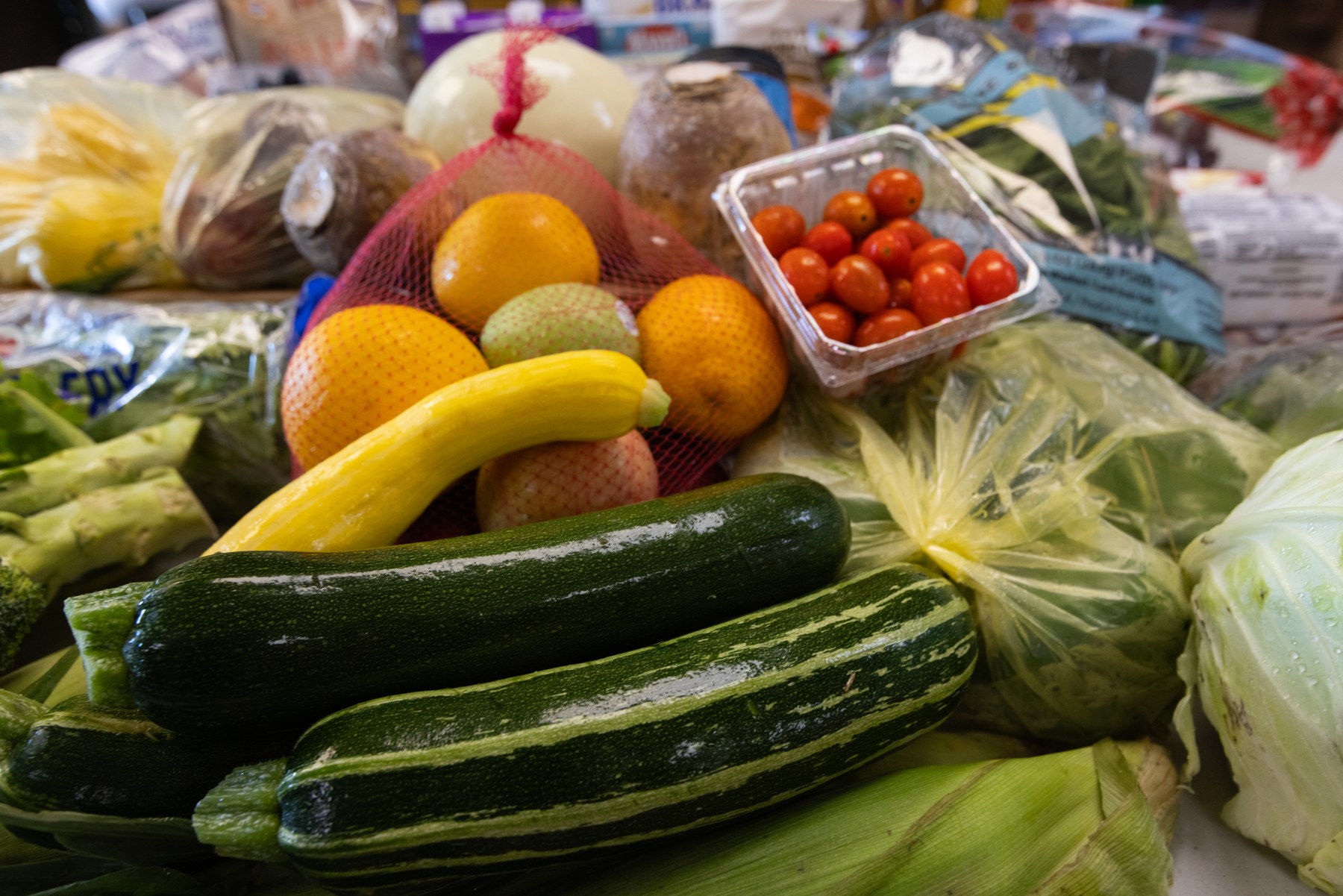
Food in the Red Cliff FDPIR demonstration project, August 2023USDAgov / U.S. Department of Agriculture; Food in the Red Cliff FDPIR demonstration project, August 2023. Public domain — U.S. federal work. Source record and photograph license linked.
Named Tribal government · Added to the original list
Red Cliff Band of Lake Superior Chippewa
Red Cliff Band of Lake Superior Chippewa is a distinct Ojibwe government associated with the northern Bayfield Peninsula and Lake Superior. Its public history relates Red Cliff to the La Pointe Band and emphasizes leaders' resistance to removal, including Chief Buffalo's delegation to Washington. The account treats the 1854 treaty and continued residence in the homeland as central to Red Cliff's political story. Read it as the Band's historical interpretation; some broad terminology and sweeping claims on the page need independent checking. A second path follows the government's Ojibwemowin program. Its public description brings history into present institutional work through language activities for children and adults, a community language plan, and training intended to develop speakers and teachers. These are program descriptions, rather than evidence of their outcomes or guarantees of present enrollment. The photograph documents food supplied in a USDA record explicitly connected to Red Cliff's distribution project and tribally operated Mino Bimaadiziiwin Farm. It illustrates a particular community program, not the food practices of all Ojibwe people.
See each region’s evidence for historical or present-day scope.
Homeland / region
Wisconsin, United States — current government listing
Research depth
Source guide
Source collection
2 annotated resources · 2 Indigenous-led
Inspected sources
2 substantive works · selected content reviewed
Initial adequacy
Still unfinished
Source review
October 27, 2026
Names & relationshipsThe state roster identifies this named Tribal Nation separately. It does not establish the full history or relationships of every broader reading label.
A source guide for a deeper dive.This entry provides a brief orientation and an organized reading path. A comprehensive deep dive has not yet been completed. Follow the annotated sources and distinguish primary community accounts from outside reference material.
Still unfinished
A bounded collection of actual selected source bodies supports a useful starting guide for this named government. It remains incomplete and does not imply community endorsement.
Assessment recorded October 27, 2026. This is separate from research completion and community review.
Compare the Band narrative with treaty texts and community-focused historical scholarship; correct broad naming and chronology issues before expansion.
Read the language plan itself and assess access, continuity and outcomes with suitable evidence.
Review community accounts beyond institutional pages; the guide is not community endorsement.
Backdrop photographs & credits
These photographs have individual, documented connections to this entry. Their captions and source records define the people, place, object, and period shown; no one photograph represents every community within a broader label.
Food in the Red Cliff FDPIR demonstration project, August 2023 USDAgov / U.S. Department of Agriculture; Food in the Red Cliff FDPIR demonstration project, August 2023. Public domain — U.S. federal work. Source record and photograph license linked.
The USDA caption explicitly names the exact Red Cliff government, its FDPIR project and tribally owned Mino Bimaadiziiwin Farm. Pixels show project food; the exact documentary caption supplies the relationship, rather than appearance alone. No claim identifies every pictured item as farm-grown or a traditional food. The title implies participation began on the photo date, while the description says October 2021; this guide adopts only the photograph date. Complete available 8192×5464 source frame proportionally resized to 1800×1201 and JPEG recompressed; no pixel crop or retouching. Original source copy retained privately. CSS crops/overlays affect display only.
Image, association, and reuse record reviewed 2026-10-27.
Full photographs are displayed proportionally above. A translucent background copy may be cropped by the viewport; it does not replace the complete image or its record.
The visual treatment does not change the research status, evidence, or remaining gaps recorded in this profile.
Start reading here
Exact named government; broader Ojibwe or Potawatomi histories and related governments remain distinct.
The Band's public historical narrative centers homeland and resistance to removal. Its inclusion of Chipewyan among Ojibwe labels and broad superlatives are not adopted; detailed chronology needs corroboration.
A public account of Red Cliff's language activities, language plan and teacher-development work. Speaker counts and the page's broad dialect taxonomy are excluded; linked books and plan were not read.
These are selected starting points. The full annotated collection, source perspectives, inspection limits and remaining research questions follow below. A starting guide is not an exhaustive history or community endorsement.
01
A homeland history from Red Cliff
The Band links its roots in the La Pointe Band to resistance against removal and the work of Chief Buffalo and other leaders. The narrative foregrounds remaining at home, while inviting further comparison with treaty texts and historical scholarship.
Red Cliff describes learning opportunities for children and adults, a comprehensive community language plan and a program for developing speakers and teachers. These descriptions provide a route into the Band's language work without treating participation or outcomes as verified.
Compare the Band narrative with treaty texts and community-focused historical scholarship; correct broad naming and chronology issues before expansion.
Read the language plan itself and assess access, continuity and outcomes with suitable evidence.
Review community accounts beyond institutional pages; the guide is not community endorsement.
Selected actual-content works support a bounded starting guide. Earlier source objects retain their original review dates and limits. Reused URLs, images and identity-only checks are not new global historical works. Full history and community review remain open.
Follow the reading path
Sources & further reading
Open any title to read the original source. Annotations explain what each link can help you explore.
No Indigenous-led source is identified in this entry yet. This is a gap in this collection, and does not imply an absence of community knowledge or organization.
Indigenous-ledRed Cliff Band of Lake Superior ChippewaSource 1
The Band's public historical narrative centers homeland and resistance to removal. Its inclusion of Chipewyan among Ojibwe labels and broad superlatives are not adopted; detailed chronology needs corroboration.
Inspection: Content reviewed for the stated scope
Scope: Actual main body lines 184–222 read, especially La Pointe relationship and Chief Buffalo narrative at 190–212. Religious specifics, superlatives, employment figures and universal legal conclusions excluded.
A public account of Red Cliff's language activities, language plan and teacher-development work. Speaker counts and the page's broad dialect taxonomy are excluded; linked books and plan were not read.
Inspection: Content reviewed for the stated scope
Scope: Actual selected language-program body lines 184–187 and resource introduction 209–224 read. Individual trainee identities, phrase archive, linked curriculum and program outcomes not assessed.
Related entries may represent alternate names, constituent communities, wider groupings, or historical connections. Read the naming notes before treating entries as equivalent.
Robey’s Atlas of Indigenous North America · Compiled October 19, 2026 · Red Cliff Band of Lake Superior Chippewa