The directory/Lac du Flambeau Band of Lake Superior Chippewa
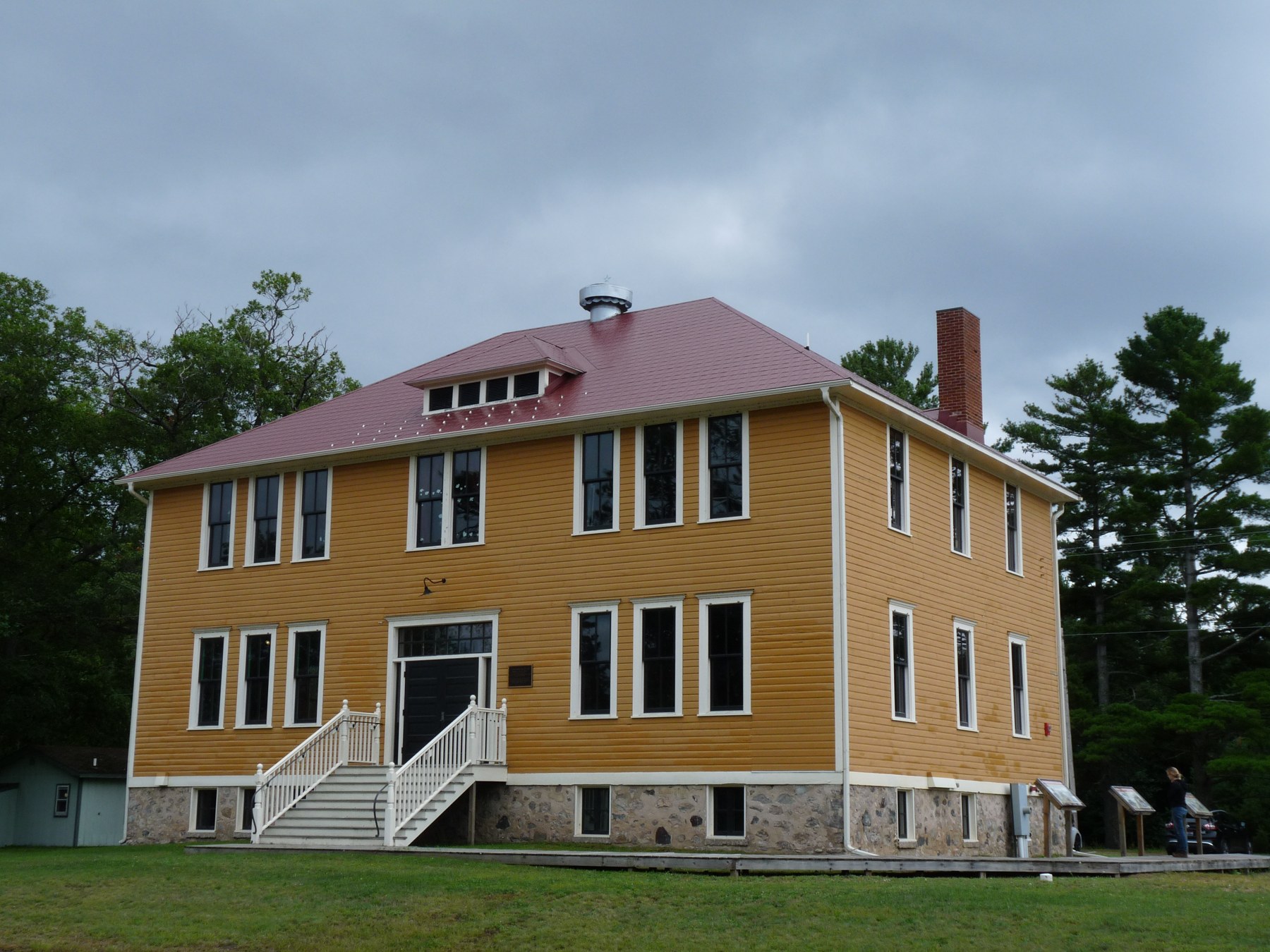
Former government boarding-school boys dormitory, Lac du Flambeau, 2019Jeff the quiet; Former government boarding-school boys dormitory, Lac du Flambeau, 2019. CC0 1.0 — creator dedication. Source record and photograph license linked.
Named Tribal government · Added to the original list
Lac du Flambeau Band of Lake Superior Chippewa
Lac du Flambeau Band of Lake Superior Chippewa is a distinct Ojibwe government whose own introduction connects the community to Chief Keeshkemun's arrival in the area in 1745. The Band explains its French name, Lake of the Torches, through nighttime fishing by torchlight. These are locally published accounts of place and identity, not a history of every Ojibwe government. The George W. Brown, Jr. Ojibwe Museum and Cultural Center provides a second starting point. The Band describes owning and operating the museum, which develops exhibits, educational programs and collections rooted in Lac du Flambeau history. The Tribal Historic Preservation Office adds a different institutional role through cultural-resource records, education and review work. Its page locates the office in the Mikwendaagoziwag Heritage Center, the former boys' dormitory pictured here. The photograph records a surviving government boarding-school building, rather than a traditional dwelling. Together, these sources introduce naming, public history and preservation; they leave the boarding school's full history, community experiences and the interpretation of museum collections for further research.
See each region’s evidence for historical or present-day scope.
Homeland / region
Wisconsin, United States — current government listing
Research depth
Source guide
Source collection
3 annotated resources · 3 Indigenous-led
Inspected sources
3 substantive works · selected content reviewed
Initial adequacy
Still unfinished
Source review
October 27, 2026
Names & relationshipsThe state roster identifies this named Tribal Nation separately. It does not establish the full history or relationships of every broader reading label.
A source guide for a deeper dive.This entry provides a brief orientation and an organized reading path. A comprehensive deep dive has not yet been completed. Follow the annotated sources and distinguish primary community accounts from outside reference material.
Still unfinished
A bounded collection of actual selected source bodies supports a useful starting guide for this named government. It remains incomplete and does not imply community endorsement.
Assessment recorded October 27, 2026. This is separate from research completion and community review.
Deepen the local chronology and name history through community-authored scholarship and primary records.
Research the boarding school with community-directed accounts and suitable primary records, without inferring experiences from a building photograph.
Review museum objects individually and verify present program and visitor access separately.
Backdrop photographs & credits
These photographs have individual, documented connections to this entry. Their captions and source records define the people, place, object, and period shown; no one photograph represents every community within a broader label.
Former government boarding-school boys dormitory, Lac du Flambeau, 2019 Jeff the quiet; Former government boarding-school boys dormitory, Lac du Flambeau, 2019. CC0 1.0 — creator dedication. Source record and photograph license linked.
The photographer identifies the 1895 boys dormitory at the Lac du Flambeau government boarding school. The exact Band's preservation page identifies the Boys Dorm as the Mikwendaagoziwag Heritage Center. This is a surviving boarding-school building, not a traditional dwelling, a universal community scene or evidence of any individual child's experience. Only public exterior pixels are used; the small visitor is unnamed. Complete available 3648×2736 source frame proportionally resized to 1800×1350 and JPEG recompressed; no pixel crop or retouching. Original source copy retained privately. CSS crops/overlays affect display only.
Image, association, and reuse record reviewed 2026-10-27.
Full photographs are displayed proportionally above. A translucent background copy may be cropped by the viewport; it does not replace the complete image or its record.
The visual treatment does not change the research status, evidence, or remaining gaps recorded in this profile.
Start reading here
Exact named government; broader Ojibwe or Potawatomi histories and related governments remain distinct.
The Band explains its local historical starting point and French place name. The short community introduction is selected; the separate Old Abe narrative is not developed or independently verified.
The Band describes museum ownership, collections and public educational work. The page mixes an Indian Bowl heading with museum content; only explicit museum paragraphs are used, without superlatives or visitor totals.
The office describes cultural-resource records and education and identifies its Heritage Center location in the boys' dormitory. A program description is not an interpretation of current law or access permission.
These are selected starting points. The full annotated collection, source perspectives, inspection limits and remaining research questions follow below. A starting guide is not an exhaustive history or community endorsement.
01
Public history in a community museum
The Band identifies the George W. Brown, Jr. museum as its own institution, rooted in local collections and designed for exhibits and education. Individual displayed objects still require their own provenance and interpretation.
The preservation office identifies the former boys' dormitory as the Mikwendaagoziwag Heritage Center. The photograph is a view of that boarding-school remnant; the selected pages do not provide a full account of the children, families or school policies involved.
Deepen the local chronology and name history through community-authored scholarship and primary records.
Research the boarding school with community-directed accounts and suitable primary records, without inferring experiences from a building photograph.
Review museum objects individually and verify present program and visitor access separately.
Selected actual-content works support a bounded starting guide. Earlier source objects retain their original review dates and limits. Reused URLs, images and identity-only checks are not new global historical works. Full history and community review remain open.
Follow the reading path
Sources & further reading
Open any title to read the original source. Annotations explain what each link can help you explore.
No Indigenous-led source is identified in this entry yet. This is a gap in this collection, and does not imply an absence of community knowledge or organization.
Indigenous-ledLac du Flambeau Band of Lake Superior ChippewaSource 1
The Band explains its local historical starting point and French place name. The short community introduction is selected; the separate Old Abe narrative is not developed or independently verified.
Inspection: Content reviewed for the stated scope
Scope: Actual About body lines 520–524 read. The page's Old Abe section was observed but excluded. Older /pages/2/about-us URL returns 404; current /about/ body is the selected work.
The Band describes museum ownership, collections and public educational work. The page mixes an Indian Bowl heading with museum content; only explicit museum paragraphs are used, without superlatives or visitor totals.
Inspection: Content reviewed for the stated scope
Scope: Actual museum body lines 520–532 read, selected ownership, purpose and collections at 530–532. Linked Indian Bowl material, object-level provenance and present opening arrangements not assessed.
The office describes cultural-resource records and education and identifies its Heritage Center location in the boys' dormitory. A program description is not an interpretation of current law or access permission.
Inspection: Content reviewed for the stated scope
Scope: Actual selected THPO body lines 521–535 read. Used for records, education and the Heritage Center location; current legal requirements, sensitive resources, staff and contact details excluded.
Related entries may represent alternate names, constituent communities, wider groupings, or historical connections. Read the naming notes before treating entries as equivalent.
Robey’s Atlas of Indigenous North America · Compiled October 19, 2026 · Lac du Flambeau Band of Lake Superior Chippewa