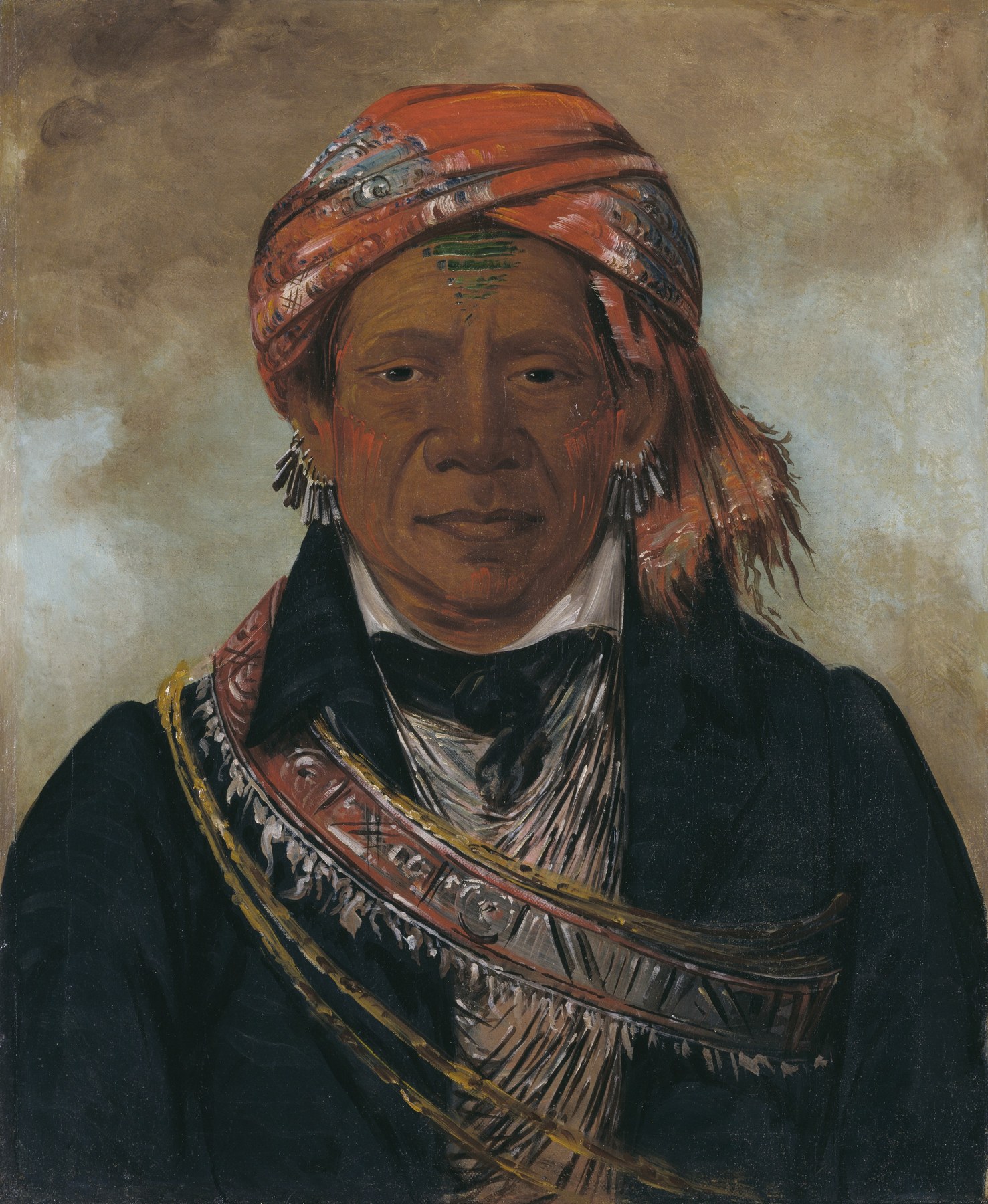
Bód-a-sin, Chief of the Tribe, 1830George Catlin, 1830. Smithsonian American Art Museum, Gift of Mrs. Joseph Harrison, Jr., 1985.66.274. Public domain.
See each region’s evidence for historical or present-day scope.
Homeland / region
Northeast / Oklahoma / Canada
Research depth
Source guide
Source collection
3 annotated resources · 3 Indigenous-led
Inspected sources
0 substantive works · selected content reviewed
Initial adequacy
Not assessed
Compiled
October 19, 2026
Names & relationshipsThe original list preserves this name as an access point. Compare the related entries and community-preferred spellings; overlapping names do not always mean identical political communities.
A source guide for a deeper dive.This entry provides a brief orientation and an organized reading path. A comprehensive deep dive has not yet been completed. Follow the annotated sources and distinguish primary community accounts from outside reference material.
Backdrop images & credits
These images have individual, documented connections to this entry. Their captions and source records define the people, place, object, and period shown; no one image represents every community within a broader label.
Bód-a-sin, Chief of the Tribe, 1830 George Catlin, 1830. Smithsonian American Art Museum, Gift of Mrs. Joseph Harrison, Jr., 1985.66.274. Public domain.
Smithsonian American Art Museum explicitly identifies Bód-a-sin as a Delaware/Lenape chief. George Catlin’s 1830 oil portrait is an outside artist’s historical portrayal of one named person, not a documentary photograph, Lenape-made art, a generic Native likeness, or an image of a present government. The museum says it was probably painted at Fort Leavenworth in today’s Kansas; that uncertainty is retained. This image does not establish a Texas connection, exact territorial boundaries, current clothing or cultural practice, descent to a particular government, or community endorsement. No meanings are assigned to the sitter’s clothing or ornaments. The museum’s paired Delaware/Lenape identification supports these two overlapping directory reading labels. They do not count as two distinct nations or imply one present government. Complete 2461x3000 museum-delivered source JPEG inspected and preserved. Web copy resized proportionally to 1477x1800 and recompressed at quality 88; no pixel crop, added detail, generated material, retouching or recoloring. Directory cards and opened-page backgrounds may use disclosed CSS crops/overlays. Preserve a full-frame route where possible. CSS crops/overlays apply to cards and backgrounds; the opened image preserves the complete delivered source frame.
Image, association, and reuse record reviewed 2026-10-26.
Full images are displayed proportionally above. A translucent background copy may be cropped by the viewport; it does not replace the complete image or its record.
The visual treatment does not change the research status, evidence, or remaining gaps recorded in this profile.
01
Identity and context
Delaware is an outside name often used for Lenape people. Distinct Lenape communities and governments have different histories.
Focus the next stage of research on: Lenape naming, removal, language and the relationship to the separate Lenape entry. The sources below are selected reading paths; their authorship, dates and community scope should guide how they are used.
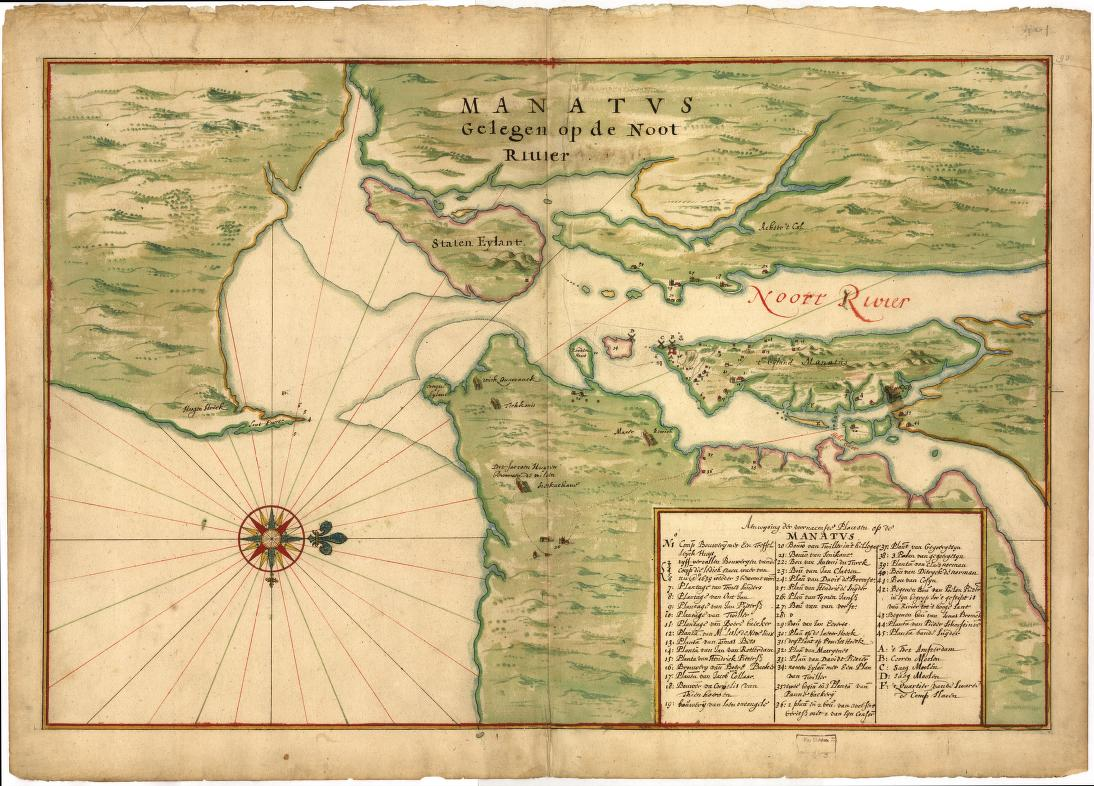
Read the Munsee village within the broader Lenape/Delaware context supported by archival interpretation and community self-description. The two existing directory labels remain separate reading routes; neither identifies a modern government as the village's unique successor.
Historical scope: Seventeenth-century village context, interpreted through modern archival scholarship and community self-description
Library of Congress, The Atlantic World: America and the Netherlands. LOC reuse notice ↗
These map connections are a growing selection. Historical depictions do not establish current boundaries, and a link does not imply community authorship or endorsement.
Follow the reading path
Sources & further reading
Open any title to read the original source. Annotations explain what each link can help you explore.
No Indigenous-led source is identified in this entry yet. This is a gap in this collection, and does not imply an absence of community knowledge or organization.
Community or Indigenous-organization perspective linked for this entry. Use “Lenape History - Delaware Tribe of Indians” to begin with the publisher’s own account; check whether its scope is one community or a wider people.
Community or Indigenous-organization perspective linked for this entry. Use “Microsoft Word - We Are Still Here - Nanticoke and Lenape History_ Booklet_1st edition 5x8.doc” to begin with the publisher’s own account; check whether its scope is one community or a wider people.
Community or Indigenous-organization perspective linked for this entry. Use “Lenape Indian Tribe Delaware, Kent County” to begin with the publisher’s own account; check whether its scope is one community or a wider people.
Related entries may represent alternate names, constituent communities, wider groupings, or historical connections. Read the naming notes before treating entries as equivalent.
Robey’s Atlas of Indigenous North America · Compiled October 19, 2026 · Delaware (Lenape)