Nimiipuu, also called Nez Perce, is a people-level route broader than the Nez Perce Tribe's Idaho government. A Wallowa community organization's history connects descendants from several reservations with renewed gathering in wal'áwa; a separate NPS account introduces treaty-era divisions among bands.
See each region’s evidence for historical or present-day scope.
Homeland / region
Pacific Northwest / Idaho / Oregon / Washington
Research depth
Source guide
Source collection
5 annotated resources · 0 Indigenous-led
Inspected sources
2 substantive works · selected content reviewed
Initial adequacy
Still unfinished
Source review
October 27, 2026
A source guide for a deeper dive.This entry provides a brief orientation and an organized reading path. A comprehensive deep dive has not yet been completed. Follow the annotated sources and distinguish primary community accounts from outside reference material.
Still unfinished
Two actual public narratives provide a focused starting point on Wallowa reconnection and treaty-era differences. They do not supply a broad Nimiipuu history, specialist language coverage or balanced community-authored documentation across the separate governments.
Assessment recorded October 27, 2026. This is separate from research completion and community review.
More Nimiipuu-authored histories, language publications and distinct Colville, Umatilla and Idaho community perspectives remain to be reviewed.
The nonprofit's account is organizational self-description; independent program evaluation, original oral recordings and long-term restoration outcomes were not examined.
Original treaty scans, oral interpretations, band-specific narratives and the linked 1877 material remain unread. No present treaty-rights or homeland-boundary conclusion is proposed.
No Nimiipuu community review or endorsement is recorded. The Spalding photograph depicts a public NPS visitor center, not a tribal government building or all Nimiipuu community life.
Backdrop photographs & credits
These photographs have individual, documented connections to this entry. Their captions and source records define the people, place, object, and period shown; no one photograph represents every community within a broader label.
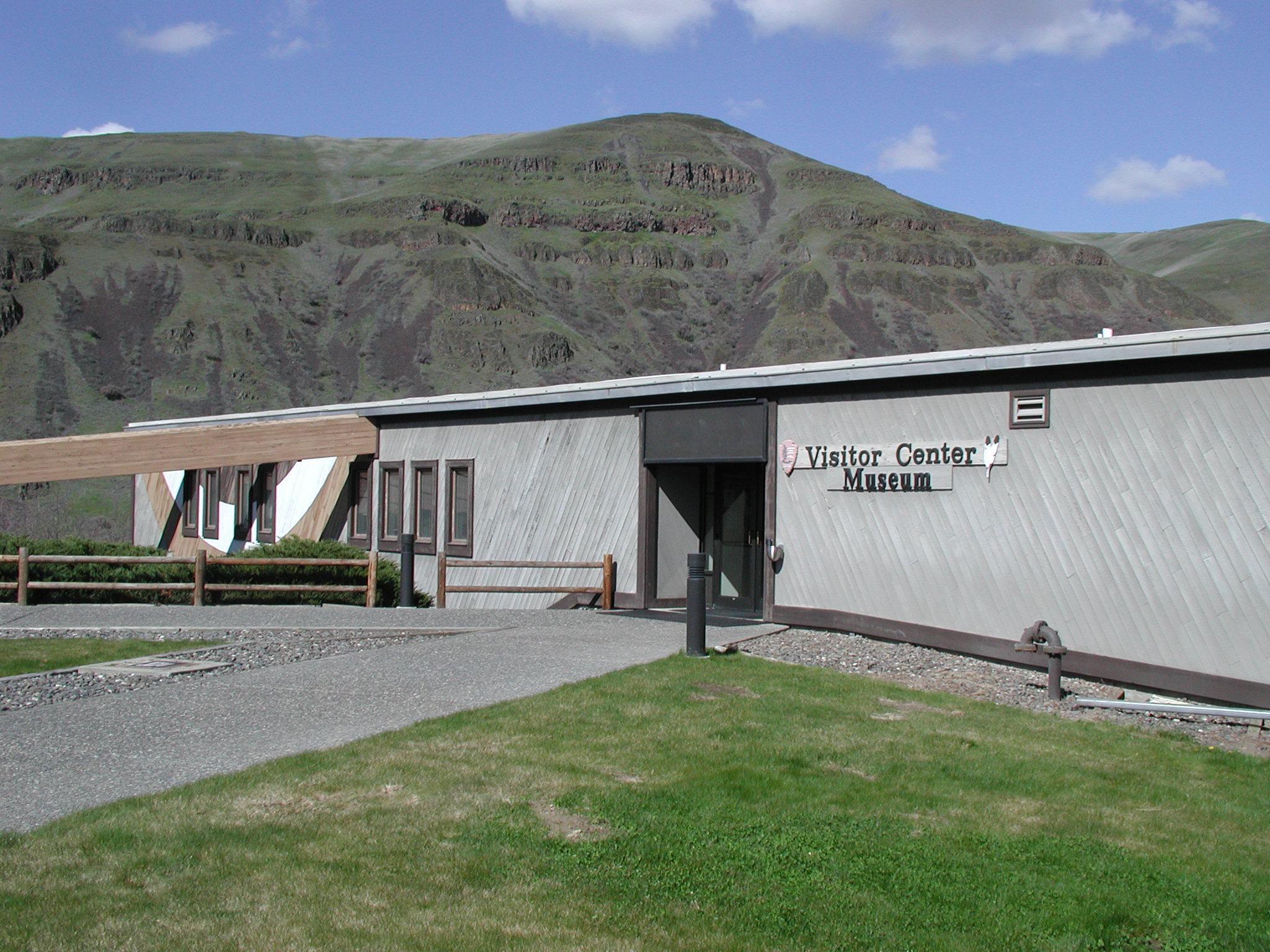
Spalding Visitor Center, Nez Perce National Historical Park National Park Service photo; Wikimedia Commons, Nepe 20060804105752.JPG.
Copy the reviewed NPS visitor-center image and its rights record without altering the Idaho-government mapping. The actual NPS Spalding account, lines 21–29 read October 27, 2026, identifies generations of Nimiipuu living/fishing at this place, park formation and expansion to sites in Oregon, Washington and Montana. Scope this image to one public interpretation institution in Nimiipuu country, not all communities or a tribal-government office. Exterior of a public National Park Service visitor center at Spalding in Idaho, not the Nez Perce Tribal government offices or a depiction of all Nimiipuu communities. The NPS Spalding Site account explicitly describes Nez Perce Tribe involvement in developing the park, including a 1963 report commissioned for the Tribe. That establishes narrow institutional and place-based relevance to this government route. Commons description, NPS attribution, PD-USGov-NPS licensing and image metadata read; complete2048x1536 original JPEG downloaded from the Original file link and visually inspected. No sensitive site, membership, territorial or ownership inference is made. No pixel edits or cropping; cards/backgrounds may use disclosed CSS cropping. Photograph credit/reuse evidence adds no substantive reading-source count.
Image, association, and reuse record reviewed 2026-10-27.
Full photographs are displayed proportionally above. A translucent background copy may be cropped by the viewport; it does not replace the complete image or its record.
The visual treatment does not change the research status, evidence, or remaining gaps recorded in this profile.
Compare its focused account of differing band responses with later community and original treaty sources.
These are selected starting points. The full annotated collection, source perspectives, inspection limits and remaining research questions follow below. A starting guide is not an exhaustive history or community endorsement.
01
Identity and context
Nimiipuu is a community name used alongside Nez Perce.
Focus the next stage of research on: Nimiipuu-authored histories, language, homelands, treaties and contemporary government. The sources below are selected reading paths; their authorship, dates and community scope should guide how they are used.
Returning to wal'áwa across reservation communities
Nez Perce Wallowa Homeland traces its beginnings to Taz Conner, a Nez Perce descendant, and local allies. Its account dates the first Tamkaliks homecoming to 1989 and nonprofit formation to 1996. The organization specifically welcomes Nez Perce descendants from Colville, Umatilla and Nez Perce reservations. This provides a community-organization perspective on reconnection; it does not make those different governments interchangeable.
Treaty history involved different bands and choices
NPS's treaty-period account distinguishes the 1855 agreement from the 1863 council held after gold discovery. It describes bands outside the proposed smaller reservation rejecting that agreement while other headmen signed it. This history helps explain why a later reservation or one government cannot stand for every Nimiipuu experience. The original documents and different oral understandings still require separate reading.
More Nimiipuu-authored histories, language publications and distinct Colville, Umatilla and Idaho community perspectives remain to be reviewed.
The nonprofit's account is organizational self-description; independent program evaluation, original oral recordings and long-term restoration outcomes were not examined.
Original treaty scans, oral interpretations, band-specific narratives and the linked 1877 material remain unread. No present treaty-rights or homeland-boundary conclusion is proposed.
No Nimiipuu community review or endorsement is recorded. The Spalding photograph depicts a public NPS visitor center, not a tribal government building or all Nimiipuu community life.
Selected actual-content works support a bounded starting guide. Earlier source objects retain their original review dates and limits. Reused URLs, images and identity-only checks are not new global historical works. Full history and community review remain open.
Maps with context
Historical maps
Explore authentic historical documents connected to this entry. Their names and boundaries reflect their makers and periods.
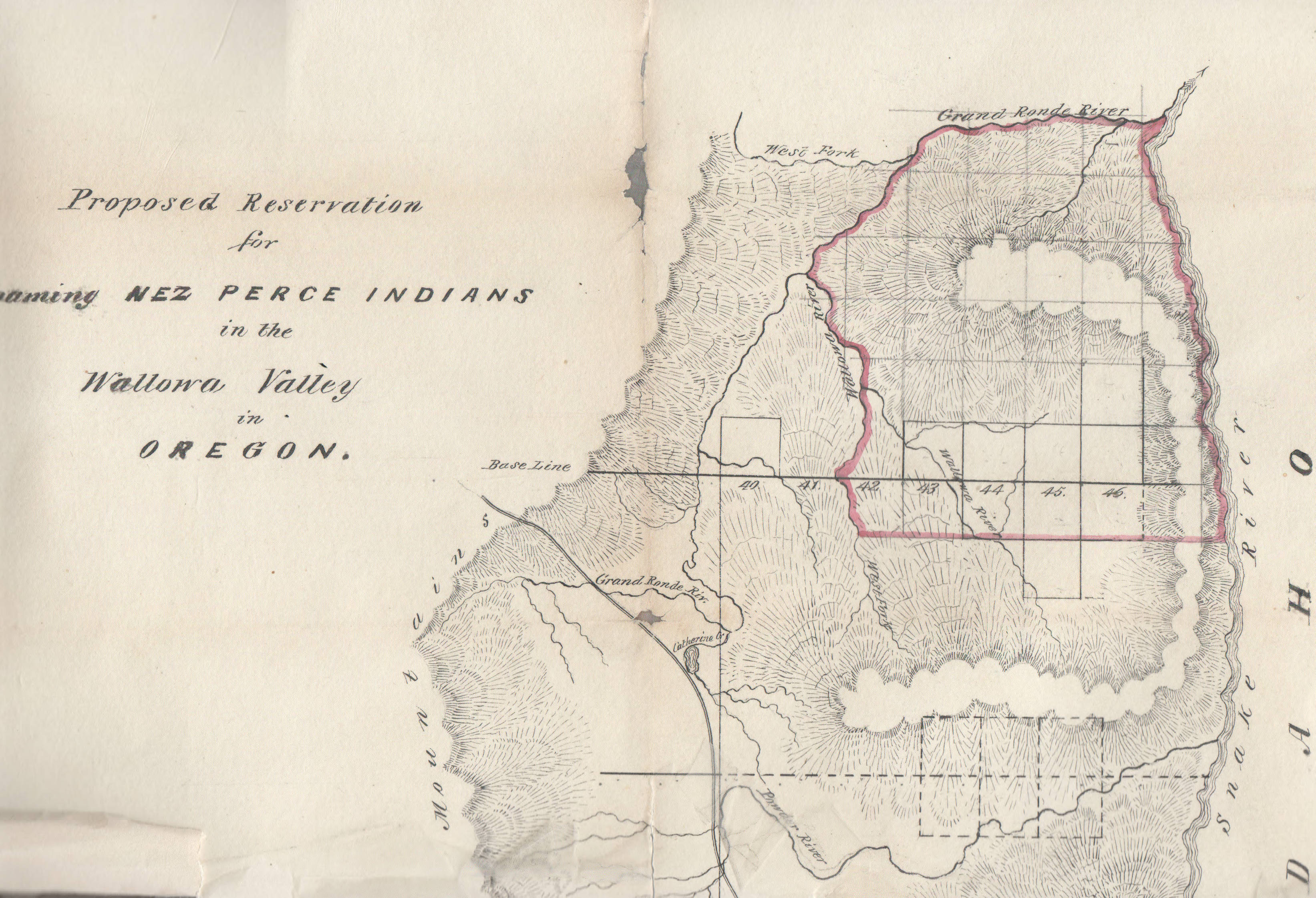
1873 · Named historical reservation proposal
Proposed Nez Perce reservation in the Wallowa Valley
Office of Indian Affairs, U.S. Department of the Interior (archive attribution; individual drafter unidentified)
The image title and archival description explicitly identify the Nez Perce. This offers a narrow reading route into federal treatment of Wallowa Valley land in 1873; it does not represent every Nez Perce community or a present government boundary.
Historical scope: 1873 Wallowa Valley proposal and executive-order context
Office of Indian Affairs, Department of the Interior; NARA, RG 75, E107, Executive Order File, Box 2, Wallowa Valley. Digital image: University of Idaho Library, Archival Idaho Photograph Collection, NARA16DC2. Public Domain Mark 1.0 ↗
These map connections are a growing selection. Historical depictions do not establish current boundaries, and a link does not imply community authorship or endorsement.
Follow the reading path
Sources & further reading
Open any title to read the original source. Annotations explain what each link can help you explore.
No Indigenous-led source is identified in this entry yet. This is a gap in this collection, and does not imply an absence of community knowledge or organization.
Historical context for this entry. Read “Camas Prairie History - Nez Perce National Historical Park (U.S. National Park Service)” with attention to the author, period covered, and communities named; compare with community-published accounts where available.
Historical context for this entry. Read “Bear Paw Battlefield History - Nez Perce National Historical Park (U.S. National Park Service)” with attention to the author, period covered, and communities named; compare with community-published accounts where available.
Historical context for this entry. Read “The Treaty Period - Nez Perce National Historical Park (U.S. National Park Service)” with attention to the author, period covered, and communities named; compare with community-published accounts where available.
A Nez Perce descendant-founded nonprofit's own history of renewed access and cultural gathering in wal'áwa. It follows the 1989 Tamkaliks beginning and 1996 nonprofit establishment, and specifically welcomes descendants from Colville, Umatilla and Nez Perce reservations. Its account supports this organization's history; it is neither a tribal government's statement nor an independently evaluated report of program outcomes. No photographs or embedded media reused.
Inspection: Content reviewed for the stated scope
Scope: Actual main narrative lines 76–98 read, including Taz E. E. Conner's attributed 1994 quotation, origins, 1989 event, 1996 incorporation and cross-reservation welcome. Synthesis selects the historical sequence and named descendant connections. No current acreage or service-availability claim, linked programs, original oral recording, financial record or media inspected.
A focused federal public-history account of the 1855 and 1863 councils, gold discovery and disagreement among Nimiipuu bands. Useful for explaining why the later reservation and a people are different scopes. This is a summary, not inspection of the original treaty texts, oral understandings or present law. Its statements about reservation reduction are attributed to NPS rather than converted into a new boundary.
Inspection: Content reviewed for the stated scope
Scope: Complete substantive body lines 21–25 read, plus December 29, 2022 update date at line 30. Interactive map, treaty links, images and Flight of 1877 link not inspected. This is a fresh review record with a new ID; baseline p247-s3 is retained unchanged.