Tribal government / contemporary community · Added to the original list
Lac Vieux Desert Band of Lake Superior Chippewa Indians
The Lac Vieux Desert Band of Lake Superior Chippewa Indians is a distinct government associated with the Watersmeet area and the lake known in its public history as Gete-gitigaani-zaaga'igan. That account places the lake within a network of waterways and trails linking Lake Superior, Lake Michigan and the Wisconsin River. It follows treaties, continued community residence and a campaign for independent federal recognition, culminating in the 1988 recognition act. The narrative distinguishes the Band from Keweenaw Bay Indian Community while acknowledging an earlier administrative relationship; shared historical language is not treated as identical present government. The Band's Historic Preservation Office offers a second perspective, explaining its responsibility toward cultural and historical resources and using the name Getegitigaaning Ojibwe Nation. Together these sources connect place, political continuity and stewardship. Their legal summaries remain attributed to the Band, and detailed treaty provisions, present eligibility, private cultural knowledge and sensitive-site locations are not established or reproduced by this starting guide.
See each region’s evidence for historical or present-day scope.
Homeland / region
Michigan
Research depth
Source guide
Source collection
2 annotated resources · 2 Indigenous-led
Inspected sources
2 substantive works · selected content reviewed
Initial adequacy
Still unfinished
Source review
October 27, 2026
Names & relationshipsIndividually named Michigan government. The State entry explicitly gives Lac Vieux Desert Band as a short constitutional reference to this same Band.
A source guide for a deeper dive.This entry provides a brief orientation and an organized reading path. A comprehensive deep dive has not yet been completed. Follow the annotated sources and distinguish primary community accounts from outside reference material.
Still unfinished
A small actual-content collection supports a useful introduction to this named government, with explicit historical, access and interpretation limits. It is not comprehensive research or community endorsement.
Assessment recorded October 27, 2026. This is separate from research completion and community review.
Read original treaty and recognition instruments and broader community histories to test detailed chronology.
Expand language, family, arts and foodways voices beyond institutional accounts.
Current legal rules and program outcomes remain unverified; sensitive locations and private knowledge are excluded.
Backdrop photographs & credits
These photographs have individual, documented connections to this entry. Their captions and source records define the people, place, object, and period shown; no one photograph represents every community within a broader label.
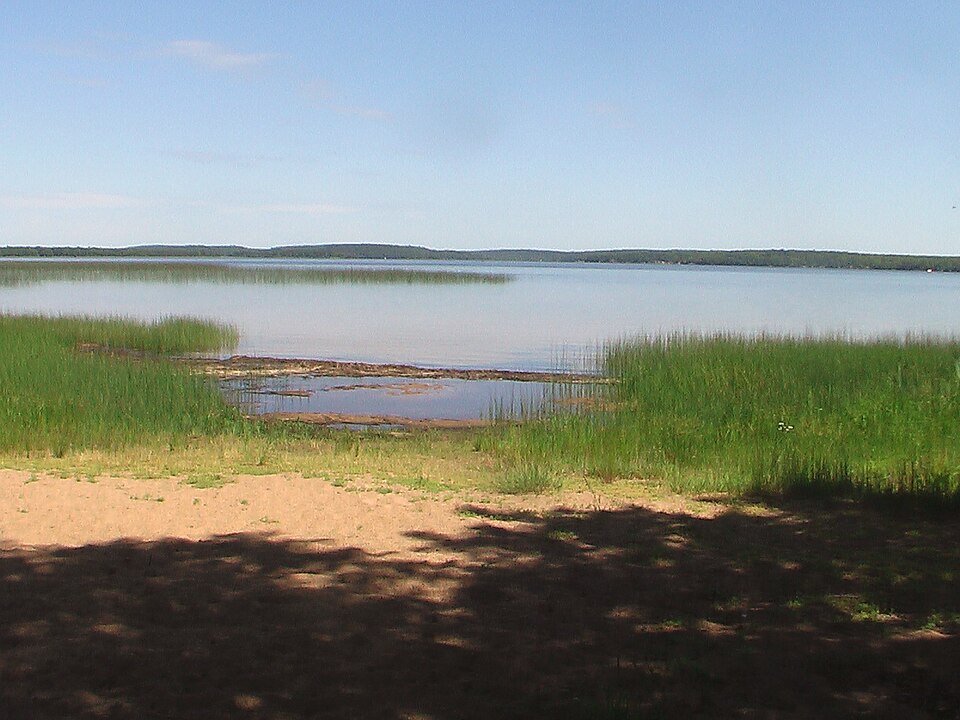
Lac Vieux Desert lake, 2007 Markheffron 2, 2007; Wikimedia Commons.CC BY-SA 3.0. 960px preview; original-resolution file not inspected.
The image record identifies the exact lake and a Wisconsin-shore camera position near a Forest Service campground. The Band's own history describes this named lake and its network of travel and trade. This supplies a narrow historical-place connection, not proof that the camera position belongs to the present reservation, a homeland polygon, exclusive territory or current jurisdiction. Do not label the Wisconsin-shore scene a government headquarters or current reservation view. Root completed normal-browser preview retrieval and full-preview visual inspection. This960px frame is reproduced unchanged; no larger-original pixel inspection is claimed. No challenge bypass or login was used. Any CSS crops and overlays affect presentation only. Exact available960px preview copied unchanged; CSS crops/overlays on directory and backdrop, full preview frame on opened page. Exact available full-frame JPEG copied unchanged; CSS crops and overlays affect card/backdrop display only.
Image, association, and reuse record reviewed 2026-10-27.
Full photographs are displayed proportionally above. A translucent background copy may be cropped by the viewport; it does not replace the complete image or its record.
The visual treatment does not change the research status, evidence, or remaining gaps recorded in this profile.
Start reading here
Named government route; broader people-level names and related governments remain distinct. Source dates, inspection scope and remaining gaps are retained.
The Band's own historical narrative supplies place and government distinctions. Treaties and the 1988 statute were not independently read; repeated web paragraphs count once and contemporary business, loan and medical-access claims are excluded.
A direct community explanation of cultural-resource stewardship. It provides public institutional context, without reproducing sensitive sites or converting its administrative statements into legal guidance.
These are selected starting points. The full annotated collection, source perspectives, inspection limits and remaining research questions follow below. A starting guide is not an exhaustive history or community endorsement.
01
A lake and a network of travel
The Band's history describes the named lake as a travel and trade hub near watershed divides. The photograph supplies a view of that particular lake from its Wisconsin shore. It is place context connected by the Band's account, not a reservation boundary or proof of ownership at the camera position.
The history recounts a sustained campaign for separate recognition and identifies the 1988 act. The preservation-office page describes caring for cultural and historical resources. Both are attributed community perspectives; original legislation, later implementation and private cultural knowledge require separate treatment.
Read original treaty and recognition instruments and broader community histories to test detailed chronology.
Expand language, family, arts and foodways voices beyond institutional accounts.
Current legal rules and program outcomes remain unverified; sensitive locations and private knowledge are excluded.
This reviewed starting guide records selected actual-content sources, their perspectives and access limits. Reused earlier reviews retain their original dates/scopes; images and repeated URLs do not create new historical works. Comprehensive history and community review remain open.
Follow the reading path
Sources & further reading
Open any title to read the original source. Annotations explain what each link can help you explore.
No Indigenous-led source is identified in this entry yet. This is a gap in this collection, and does not imply an absence of community knowledge or organization.
Indigenous-ledLac Vieux Desert Band of Lake Superior Chippewa IndiansSource 1
The Band's own historical narrative supplies place and government distinctions. Treaties and the 1988 statute were not independently read; repeated web paragraphs count once and contemporary business, loan and medical-access claims are excluded.
Inspection: Content reviewed for the stated scope
Scope: Actual selected public history lines 29–37 read: named lake and transport relationships, treaty summary, Watersmeet continuity, administrative relationship and 1988 recognition. Later commercial-finance, medical-access and precise trail material not used.
A direct community explanation of cultural-resource stewardship. It provides public institutional context, without reproducing sensitive sites or converting its administrative statements into legal guidance.
Inspection: Content reviewed for the stated scope
Scope: Actual public purpose/history body lines 27–36 read. Synthesis uses office purpose, Getegitigaaning naming and 2003 establishment; legal jurisdiction, permit rules, staff, downloads, maps and site reports not independently investigated.