The Chippewas of Georgina Island identify themselves as an Anishinaabe Nation connected to Lake Simcoe. Their public account distinguishes their community history from the related Beausoleil and Rama communities; a separate case study introduces dated climate-adaptation planning.
See each region’s evidence for historical or present-day scope.
Homeland / region
Ontario, Canada — listing address only
Research depth
Source guide
Source collection
2 annotated resources · 1 Indigenous-led
Inspected sources
2 substantive works · selected content reviewed
Initial adequacy
Still unfinished
Source review
October 27, 2026
Names & relationshipsListed as an Anishinabek Nation member First Nation. This is an organizational relationship; membership alone does not establish ethnicity, language, ancestry, citizenship, jurisdiction or representation of another named community.
A source guide for a deeper dive.This entry provides a brief orientation and an organized reading path. A comprehensive deep dive has not yet been completed. Follow the annotated sources and distinguish primary community accounts from outside reference material.
Still unfinished
A small, purposefully selected actual-content starting path and specifically scoped credited image are now available. Fuller history, source comparison and community review remain open; quantity does not establish completion.
Assessment recorded October 27, 2026. This is separate from research completion and community review.
Seek fuller community-authored histories of families, language learning and relationships among the Lake Simcoe islands.
Read original public project reports before extending climate findings; community surveys and personal knowledge remain outside this review.
Review later implementation assessments and legal/governance materials separately; no current safety or legal advice is provided.
Backdrop photographs & credits
These photographs have individual, documented connections to this entry. Their captions and source records define the people, place, object, and period shown; no one photograph represents every community within a broader label.
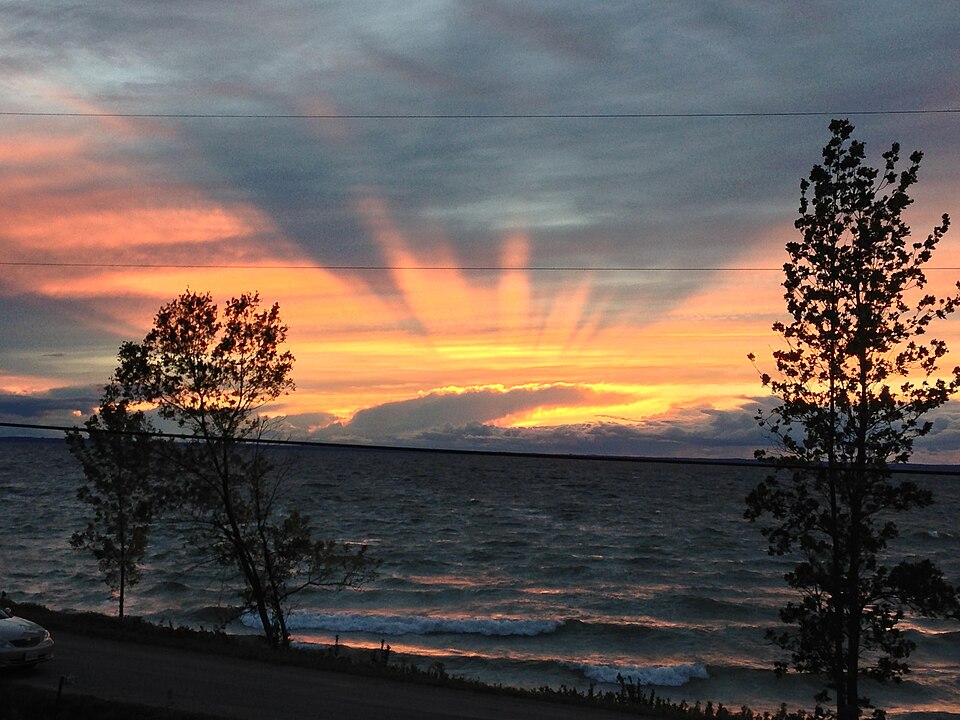
Sunset on Georgina Island, September 2012 Ken Snider / Wikimedia Commons · CC BY-SA 2.0
The exact photographer-captioned Georgina Island landscape illustrates the island specifically identified in the Nation’s own community history. It does not establish boundaries, private access permissions, every community member or current water/ice conditions. The inspected copy is the provider-listed960px full-frame preview, not the larger original. Parent imported the supplied complete JPEG unchanged; the recorded original/preview/earlier-derivative limits remain. CSS crops/overlays affect display only.
Image, association, and reuse record reviewed 2026-10-27.
Full photographs are displayed proportionally above. A translucent background copy may be cropped by the viewport; it does not replace the complete image or its record.
The visual treatment does not change the research status, evidence, or remaining gaps recorded in this profile.
Start reading here
A short starting path through selected actual-content works. Read each annotation for the specific community, period and inspection limits; this is not a complete history or community endorsement.
Follow a different aspect of community life, keeping its date and evidence limits in view.
These are selected starting points. The full annotated collection, source perspectives, inspection limits and remaining research questions follow below. A starting guide is not an exhaustive history or community endorsement.
01
The Nation’s own historical account
The Chippewas of Georgina Island’s public account follows Chief Joseph Snake’s community through the Coldwater experiment and a return to the Lake Simcoe islands. It distinguishes this history from those of the related communities under Chiefs Assance and Yellowhead. The Nation also describes continuing responsibilities toward water and future generations. Its legal and governance statements should be read as attributed institutional positions, not conclusions supplied by this directory.
A national climate-assessment case study describes Georgina Island’s 2012–2015 adaptation project. It explains how community meetings, surveys and scientific information informed assessments of changing ice, water and other conditions. The account reports a planning process and proposed next steps. It expressly leaves later implementation progress unresolved, so it cannot establish present safety, ecological conditions or completed outcomes.
Develop a community-directed history and annotated reading collection.
Review community-specific imagery and reuse terms before substantive profile publication.
Review detailed relationships, naming changes and historical regional connections.
Seek fuller community-authored histories of families, language learning and relationships among the Lake Simcoe islands.
Read original public project reports before extending climate findings; community surveys and personal knowledge remain outside this review.
Review later implementation assessments and legal/governance materials separately; no current safety or legal advice is provided.
Cohort06: selected actual-content sources and specifically scoped credited imagery form a bounded starting guide. Reused publications/photos are not new global works. Comprehensive history and community review remain open.
Follow the reading path
Sources & further reading
Open any title to read the original source. Annotations explain what each link can help you explore.
No Indigenous-led source is identified in this entry yet. This is a gap in this collection, and does not imply an absence of community knowledge or organization.
Indigenous-ledChippewas of Georgina Island First NationSource 1
Complete main body read. The Nation’s account of Lake Simcoe, Coldwater, return to the islands and community priorities. Current legal powers, treaty settlements and jurisdiction statements are the Nation’s published positions, not independently adjudicated here.
Inspection: Content reviewed for the stated scope
Scope: Complete main body, web lines5–33. Perspective: Nation self-description.
Review recorded: October 27, 2026
Access note: Actual substantial indexed public body read without an account or challenge. Legal/governance claims attributed, not independently adjudicated; no present numerical totals adopted.
Complete case-study body read, including methods, actions, outcomes and next steps. Covers the community-led 2012–2015 planning project; explicitly says available information does not establish later implementation progress. Underlying surveys and full project reports were not independently read.
Inspection: Content reviewed for the stated scope
Scope: Complete case-study body, web lines20–66 including explicit NextSteps limit. Perspective: National-assessment case study names GeorginaIsland as project lead.
Review recorded: October 27, 2026
Access note: Actual substantial indexed public body read without an account or challenge. Underlying surveys/reports not read; explicitly no evidence of progress after2015nextsteps.