Biigtigong Nishnaabeg is an Ojibway community at the mouth of the Pic River on Lake Superior. Its own public accounts connect waterways, fishing, community education and responsibilities to future generations. These sources provide a starting point without settling territorial or legal claims.
See each region’s evidence for historical or present-day scope.
Homeland / region
Ontario, Canada — listing address only
Research depth
Source guide
Source collection
2 annotated resources · 2 Indigenous-led
Inspected sources
2 substantive works · selected content reviewed
Initial adequacy
Still unfinished
Source review
October 27, 2026
Names & relationshipsListed as an Anishinabek Nation member First Nation. This is an organizational relationship; membership alone does not establish ethnicity, language, ancestry, citizenship, jurisdiction or representation of another named community.
A source guide for a deeper dive.This entry provides a brief orientation and an organized reading path. A comprehensive deep dive has not yet been completed. Follow the annotated sources and distinguish primary community accounts from outside reference material.
Still unfinished
A small, purposefully selected actual-content starting path and specifically scoped credited image are now available. Fuller history, source comparison and community review remain open; quantity does not establish completion.
Assessment recorded October 27, 2026. This is separate from research completion and community review.
Seek additional community-authorized histories, language resources and public evaluations of education programs.
Inspect later monitoring results and recognition records separately; do not turn plans or assertions into outcomes.
Backdrop photographs & credits
These photographs have individual, documented connections to this entry. Their captions and source records define the people, place, object, and period shown; no one photograph represents every community within a broader label.
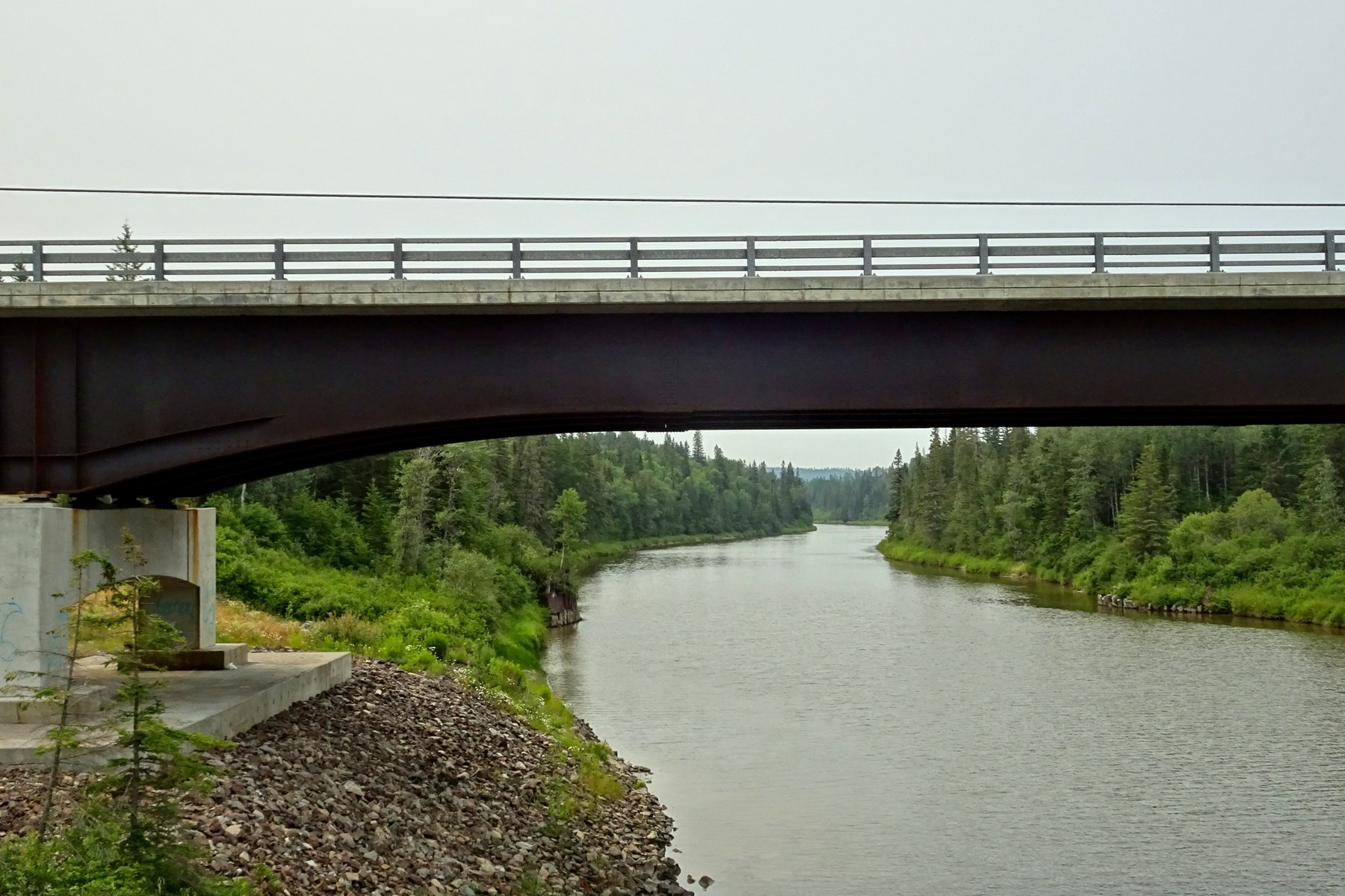
Pic River at the Highway17 bridge P199 / Wikimedia Commons · CC BY-SA 4.0
The actual photographic record identifies the Pic River at Highway17. Biigtigong’s own submission and custodian-provided waterways account explicitly identify this river as a source of food, travel and community relationships. This is a public view of the named waterway, not a photograph of the river-mouth settlement, surveyed territory or a site-specific cultural claim. Complete4000×2665 source frame visually inspected, proportionally resized to1800×1199 and JPEG recompressed. No pixel crop or retouching. CSS crops/overlays affect display only. The photographic image remains available under CC BY-SA 4.0; creator/source/license credit retained. Parent imported the supplied complete JPEG unchanged; the recorded original/preview/earlier-derivative limits remain. CSS crops/overlays affect display only.
Image, association, and reuse record reviewed 2026-10-27.
Full photographs are displayed proportionally above. A translucent background copy may be cropped by the viewport; it does not replace the complete image or its record.
The visual treatment does not change the research status, evidence, or remaining gaps recorded in this profile.
Start reading here
A short starting path through selected actual-content works. Read each annotation for the specific community, period and inspection limits; this is not a complete history or community endorsement.
Follow a custodian-provided waterways account, keeping its self-declared and unverified status explicit.
These are selected starting points. The full annotated collection, source perspectives, inspection limits and remaining research questions follow below. A starting guide is not an exhaustive history or community endorsement.
01
Fishing and community education
Biigtigong’s2016 Fisheries Act submission describes fishing as a source of food, knowledge and connection. In its selected education discussion, the Nation says it began changing school curriculum in2014 to include land-based activities and held a community fish camp in2016 at the mouth of the Pic River. The account explains why learning across generations matters to the community. It is a dated primary submission, not evidence that every later education goal was completed.
The2026 ICCA Registry case study presents the custodians’ account of relationships with six waterways, including the Pic River. It describes efforts to involve the community in stewardship, reconnect younger generations with waterways and develop locally directed monitoring. The registry explicitly calls the initiative self-declared and not yet peer-reviewed. Readers should distinguish those community goals and interpretations from independently established legal recognition, surveyed boundaries or verified environmental outcomes.
Develop a community-directed history and annotated reading collection.
Review community-specific imagery and reuse terms before substantive profile publication.
Review detailed relationships, naming changes and historical regional connections.
Seek additional community-authorized histories, language resources and public evaluations of education programs.
Inspect later monitoring results and recognition records separately; do not turn plans or assertions into outcomes.
Cohort06: selected actual-content sources and specifically scoped credited imagery form a bounded starting guide. Reused publications/photos are not new global works. Comprehensive history and community review remain open.
Follow the reading path
Sources & further reading
Open any title to read the original source. Annotations explain what each link can help you explore.
No Indigenous-led source is identified in this entry yet. This is a gap in this collection, and does not imply an absence of community knowledge or organization.
Indigenous-ledBiigtigong Nishnaabeg; hosted by the House of CommonsSource 1
Inspected the dated cover and printed pp.2–3 (PDF pp.3–4), rendered because the PDF has no selectable text. The Nation’s November30,2016 submission links fishing, food and land-based education, including a2016 community fish camp. Its later legislative recommendations, underlying studies and photographs were not separately reviewed or reproduced; this is a dated community submission, not current law.
Inspection: Content reviewed for the stated scope
Scope: Inspected the dated cover and printed pp.2–3 (PDF pp.3–4), rendered because the PDF has no selectable text. The Nation’s November30,2016 submission links fishing, food and land-based education, including a2016 community fish camp. Its later legislative recommendations, underlying studies and photographs were not separately reviewed or reproduced; this is a dated community submission, not current law.
Review recorded: October 27, 2026
Access note: Public11-page PDF downloaded normally200. No selectabletext; datedcover and selectedprintedpp2–3/PDFpp3–4 renderedwithPoppler and visuallyread. No fullPDF/image-reuse claim.
Read the complete case study, including its final status disclaimer. Custodian-provided account of relationships with six waterways, intergenerational learning and planned community monitoring. Published August2026; the registry labels the ICCA self-declared and not yet peer-reviewed. Legal/title claims, current water-safety claims, population figures and recognition outcomes are not adopted as independently established facts.
Inspection: Content reviewed for the stated scope
Scope: Read the complete case study, including its final status disclaimer. Custodian-provided account of relationships with six waterways, intergenerational learning and planned community monitoring. Published August2026; the registry labels the ICCA self-declared and not yet peer-reviewed. Legal/title claims, current water-safety claims, population figures and recognition outcomes are not adopted as independently established facts.
Review recorded: October 27, 2026
Access note: Substantial actual public article body read through the web reader; this is not an inspection of linked publications, photographs or underlying records. No login or reader paywall was encountered for the inspected text.