Atikameksheng Anishnawbek’s own history identifies Ojibway, Algonquin and Odawa ancestry and explains its earlier Whitefish Lake name. Public historical and planning sources connect language, archival work and community participation while leaving detailed family histories and later outcomes open.
See each region’s evidence for historical or present-day scope.
Homeland / region
Ontario, Canada — Lake Huron region member listing
Research depth
Source guide
Source collection
2 annotated resources · 2 Indigenous-led
Inspected sources
2 substantive works · selected content reviewed
Initial adequacy
Still unfinished
Source review
October 27, 2026
Names & relationshipsListed as an Anishinabek Nation member First Nation. Membership alone is not treated as proof of Ojibwe, Anishinaabe or other ethnic identity.
A source guide for a deeper dive.This entry provides a brief orientation and an organized reading path. A comprehensive deep dive has not yet been completed. Follow the annotated sources and distinguish primary community accounts from outside reference material.
Still unfinished
A small, purposefully selected actual-content starting path and specifically scoped credited image are now available. Fuller history, source comparison and community review remain open; quantity does not establish completion.
Assessment recorded October 27, 2026. This is separate from research completion and community review.
Inspect community-authored memories and original historical records beyond the public overview.
Read the remaining plan chapters and subsequent evaluations before making claims about completed programs.
Expand language, family, education and livelihoods histories; no speaker or population total is asserted.
Backdrop photographs & credits
These photographs have individual, documented connections to this entry. Their captions and source records define the people, place, object, and period shown; no one photograph represents every community within a broader label.
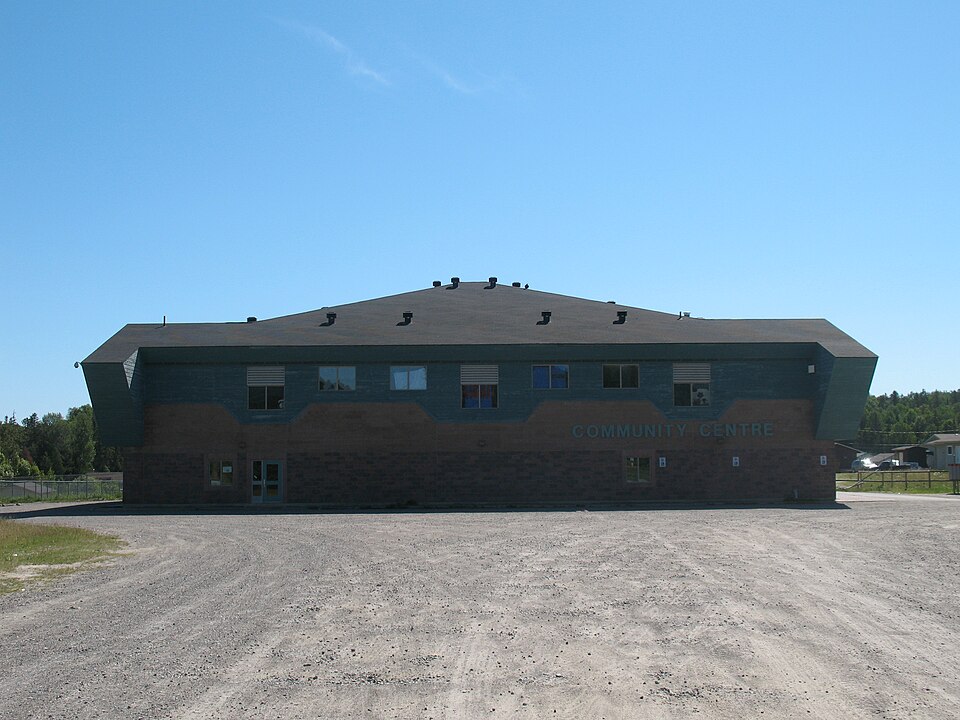
Whitefish Lake First Nation community centre, July 2010 Hans-Jürgen Hübner · 2010-07 · CC BY 3.0, via Wikimedia Commons.
The named community centre is identified by the photographer as Whitefish Lake First Nation; the Nation’s own history explicitly establishes Whitefish Lake as its former name. This is a dated public building image, not evidence of current programming or every community member. Exact source record, photographer and media-specific licence read; no image-based historical source count. Parent imported the supplied complete JPEG unchanged; the recorded original/preview/earlier-derivative limits remain. CSS crops/overlays affect display only.
Image, association, and reuse record reviewed 2026-10-27.
Full photographs are displayed proportionally above. A translucent background copy may be cropped by the viewport; it does not replace the complete image or its record.
The visual treatment does not change the research status, evidence, or remaining gaps recorded in this profile.
Start reading here
A short starting path through selected actual-content works. Read each annotation for the specific community, period and inspection limits; this is not a complete history or community endorsement.
Use the selected introduction to understand planning principles while separating proposals from results.
These are selected starting points. The full annotated collection, source perspectives, inspection limits and remaining research questions follow below. A starting guide is not an exhaustive history or community endorsement.
01
History and the work of remembering
Atikameksheng’s public history names Ojibway, Algonquin and Odawa ancestors and identifies Whitefish Lake as an earlier community name. It recalls a nineteenth-century trading post and describes library efforts to preserve documents and recordings through community contributions. The linked memories book and original records remain further research tasks. The community’s own account should lead the reading, without treating every historical place name as an unchanged modern boundary.
The 2020 Comprehensive Community Plan links cultural memory, learning, well-being, infrastructure and stewardship. Its introduction calls for participation across community life and distinguishes a general framework from detailed work plans. It also emphasizes revision and evaluation. These passages explain the proposed planning process; they do not show that every goal was funded, implemented or achieved after publication.
Develop a community-directed history and annotated reading collection.
Review community-specific imagery and reuse terms before substantive profile publication.
Review detailed relationships, naming changes and historical regional connections.
Inspect community-authored memories and original historical records beyond the public overview.
Read the remaining plan chapters and subsequent evaluations before making claims about completed programs.
Expand language, family, education and livelihoods histories; no speaker or population total is asserted.
Cohort06: selected actual-content sources and specifically scoped credited imagery form a bounded starting guide. Reused publications/photos are not new global works. Comprehensive history and community review remain open.
Follow the reading path
Sources & further reading
Open any title to read the original source. Annotations explain what each link can help you explore.
No Indigenous-led source is identified in this entry yet. This is a gap in this collection, and does not imply an absence of community knowledge or organization.
Complete main history body read. Discusses the former Whitefish Lake name, the trading post and community library/archive work. This is the Nation’s public historical interpretation; the cited memories book, underlying treaty documents and recovered objects were not independently inspected. No current boundary or legal interpretation is adopted.
Inspection: Content reviewed for the stated scope
Scope: Complete four-paragraph History mainbody, web lines56–59.
Review recorded: October 27, 2026
Access note: Public actual-content body/PDF selected pages were read without a login. Nation’s public historical interpretation, not an independent treaty, legal, archaeological or memories-book review. Historical places/names are not current legal borders.
March 2020, 96-page PDF. Read authorship front matter (PDF p.3) and printed pp.2–5 (PDF pp.11–14): planning domains, participation, implementation and evaluation. Produced by community members, leadership and staff with Four Worlds support. A dated planning framework, not proof of completed goals or a review of all chapters.
Inspection: Content reviewed for the stated scope
Scope: Authorship frontmatterPDFp3 and complete printedpp2–5/PDFpp11–14 of96. Downloaded34,661,524byte publicPDF; pypdfselected text actually read.
Review recorded: October 27, 2026
Access note: Public actual-content body/PDF selected pages were read without a login. Communitymembers/leadership/staff plan withFourWorldsCentre support. Webfiletool rejectedlargecontent, ordinarydirectdownload200succeeded. No claim allchapters orplanoutcomes inspected; document is a2020 framework.