Atakapa/Atakapan is a historical label used in Gulf Coast records for multiple groups in present-day Louisiana and Texas. The Atakapa-Ishak Nation of Southwest Louisiana and Southeast Texas, Grand Bayou Indian Village’s Atakapa-Ishak/Chawasha community, and the Attakapas Opelousas Prairie Tribe are identified as distinct present organized groups in the sources cited here; The Louisiana Attakapas Eagle Band also appears in a short page as a self-described present organization; the relationship between its Four Winds affiliation wording and the Governor’s roster entry “Four Winds Cherokee” remains unresolved here. These accounts are not collapsed into one government. This profile attributes historical syntheses and community perspectives to their authors, and does not infer disappearance from language loss or older population claims.
See each region’s evidence for historical or present-day scope.
Homeland / region
Gulf Coast / Louisiana / Texas
Research depth
Expanded profile
Source collection
19 annotated resources · 3 Indigenous-led
Inspected sources
13 substantive works · selected content reviewed
Initial adequacy
Still unfinished
Source review
October 26, 2026
Names & relationshipsAtakapa is a historical outside label; Ishak is a self-designation. The people and their associated historical groups are broader than any single present-day Ishak organization. A Louisiana Attakapas Eagle Band page is included as its own contemporary self-description, alongside an official state roster. The Band’s webpage states an affiliation using the name “Four Winds Tribe Louisiana Cherokee Confederation” and asserts state recognition for its Calcasieu/Eagle band; the Governor’s roster uses “Four Winds Cherokee” and does not list “Louisiana Attakapas Eagle Band” separately. These records do not resolve whether the names refer to the same listed body, so no equivalence or separate recognition determination is inferred.
An expanded introduction, with sources reviewed.This profile develops several themes through identified sources. Citations connect each section to its evidence; remaining gaps appear below. It has not been reviewed or endorsed by the community.
Still unfinished
One newly read regional mission-history study adds useful Texas context to the twelve-work guide, bringing the substantive count to thirteen. It does not resolve inconsistent historical names or replace direct colonial-record, archaeological and broader community review. The additional archival dossier located in this pass remains unread and uncounted.
Assessment recorded October 26, 2026. This is separate from research completion and community review.
Original Spanish/French records, mission files, specialist archaeology and the Smithsonian’s Swanton/Morse manuscript cards remain unread.
Current community perspectives are meaningful but not comprehensive across all groups connected to the historical label.
The complete Kimball grammar and Darensbourg–Kaufman language-renewal chapter were not accessed.
No community review is recorded; historical identity and group relationships remain unresolved in the sources examined.
The 2021 Texas Observer interview is one elder’s reported perspective; its accompanying map and underlying archaeological evidence were not independently reviewed, and sensitive cultural-site details are deliberately omitted.
Backdrop photographs & credits
These photographs have individual, documented connections to this entry. Their captions and source records define the people, place, object, and period shown; no one photograph represents every community within a broader label.
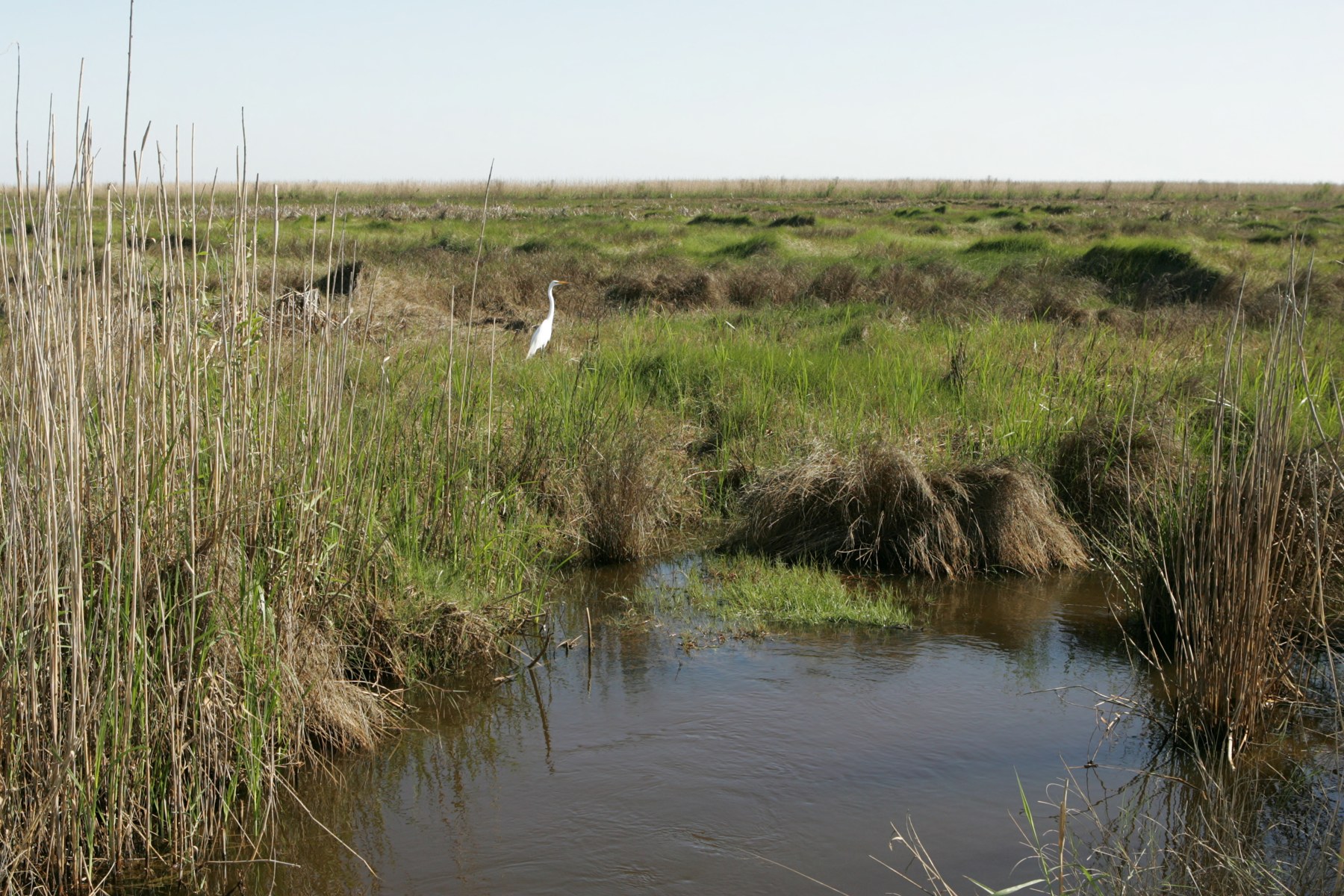
Marsh at Sabine National Wildlife Refuge Steve Hillebrand / USFWS, Sabine National Wildlife Refuge · Public domain
Modern southwest Louisiana coastal scenery. USFWS places the refuge between Calcasieu and Sabine lakes. Already cited Atakapa/Ishak accounts describe the wider southwest Louisiana and southeast Texas coastal region; this image illustrates that regional environment. It does not identify a village, ceremonial place, reservation, historical boundary or every present community. Read the complete primary media record, its image identification, photographer credit and item-specific rights statement; read the refuge's opening location paragraph. Rechecked the regional geography passages of the existing TSHA and Darensbourg sources. Visually inspected the complete 3504×2336 original image, linked by the media record's Original download. No generated content, retouching or crops were applied. The complete available frame was proportionally resized/compressed for web copies without upscaling or retouching. Card/backdrop CSS crops and overlays apply; the page banner preserves the complete frame.
Image, association, and reuse record reviewed 2026-10-26.
Full photographs are displayed proportionally above. A translucent background copy may be cropped by the viewport; it does not replace the complete image or its record.
The visual treatment does not change the research status, evidence, or remaining gaps recorded in this profile.
Start reading here
Historical Atakapa labels, Ishak self-designation, language and present organizations are not interchangeable. Grand Bayou’s Atakapa-Ishak/Chawasha community is distinct from the Atakapa-Ishak Nation; the Eagle Band/Four Winds naming and state-roster relation remains unresolved.
Named Grand Bayou members describe their community’s coastal stewardship and daily conditions in this dated report.
These are selected starting points. The full annotated collection, source perspectives, inspection limits and remaining research questions follow below. A starting guide is not an exhaustive history or community endorsement.
01
Names and community scope
The Nation’s own pages use Ishak and Atakapa-Ishak and describe its Southwest Louisiana and Southeast Texas scope. Jeffery U. Darensbourg’s public-history essay and the Handbook of Texas show how older outside records used forms such as Atakapa/Atakapan for several groups and adjacent bands. Darensbourg also describes other organized Ishak groups, including the Attakapas Opelousas Prairie Tribe and Grand Bayou Indian Village. These sources do not establish a single present government for everyone associated with the historical label; the cultural and political accounts remain community-specific. A separate Louisiana Attakapas Eagle Band webpage describes the group as part of the Four Winds Tribe Louisiana Cherokee Confederation and claims the Calcasieu/Eagle band is state recognized. On the roster checked October 23, 2026, the Louisiana Governor’s Office lists “Four Winds Cherokee” under State Recognized Tribes but does not separately list an Attakapas Eagle Band entry. Since the names are not identical, these two short records do not establish whether the roster entry covers that Band. They document the group’s self-description and the public roster wording, not independent historical evidence or a verified recognition determination. A 2021 Texas Observer interview with Mary LeBlanc, identified by the reporter as Akokisa and a retired Nation council member, offers her account of clan names and local geography. The newspaper says its Unceded project worked with tribal representatives on mapping homelands on their own terms. These are LeBlanc’s reported perspectives; the article’s map is not treated here as boundary evidence, and sensitive ceremonial locations are not reproduced.
The Handbook of Texas and the 1932 Bureau of American Ethnology volume summarize communities and language documentation along the southwest Louisiana–southeast Texas coast. Their accounts depend substantially on European colonial records and early ethnography, with inconsistent group names and dated framing. Claims about cannibalism and rapid demographic loss are reported as historical-source claims, not repeated as settled descriptions of living people. Original colonial records and the archival field cards described by the Smithsonian have not been inspected for this profile. LeBlanc also gives a first-person account of mound use, continuity and change in the region. Those statements are attributed to her and are not independently verified archaeological findings in this guide.
The community account uses Ishakkoy and Yukhíti Kóy for the language and identifies contemporary writing and song activity. In a 2021 essay, Nation member Jeffery U. Darensbourg describes composing poems and song lyrics from examples in the Ishakkoy dictionary and collaborating on the film Hoktiwe; this is his account of a specific creative process, not a measure of language proficiency or community-wide program outcomes. The Living Dictionary says its 2022 edition was produced in close collaboration with Ishāk community members; selected entries and the project overview were inspected, but its permission terms preclude copying its content here. The 1932 dictionary preserves historical materials collected by Gatschet and Swanton, and Geoffrey Kimball’s later grammar reanalyzes those notes. Only selected grammar excerpts were available.
The Atakapa-Ishak Nation’s cultural page describes elder-led work, artists, basketry, shellwork and beadwork, and connects zydeco to its own community interpretation and named scholarship. Darensbourg’s interview and essay give his personal perspective as a Nation member on Ishakkoy poetry, place and historical food memory. His essay explicitly distinguishes inherited memory from his own experience and builds on an older written account; that reflection is valuable as a contemporary community voice but is not independent proof of every historical detail or of a universal Ishak cultural practice.
The Atakapa-Ishak Nation of Southwest Louisiana and Southeast Texas and the Atakapa-Ishak/Chawasha community of Grand Bayou Indian Village appear in distinct first-party and reported accounts. An Associated Press report quotes named Grand Bayou members about their own fishing, community life and coastal stewardship. The First People’s Conservation Council page is a brief corroborating community-context link. These sources describe particular organizations and people; they do not speak for every descendant or community linked to historical Atakapa names. The Observer interview adds one named Akokisa elder’s perspective on community continuity, visibility and safety in southeast Texas. It should be read alongside the Nation’s own pages and Grand Bayou’s separately scoped accounts, not generalized to all present groups.
Trade and conditional participation around a mission
Margaret Swett Henson places El Orcoquisac within competing French and Spanish efforts to control trade in southeastern Texas. Her account distinguishes colonial plans for a mission and presidio from local people’s participation: offers of supplies, disagreements and conditions on settlement shaped their encounters. Read its names, including Orcoquisa and Attakapa, in that eighteenth-century setting. The article is a historian’s reconstruction through earlier documentary scholarship, not a first-person Indigenous account or proof of present affiliations. Its underlying colonial manuscripts still need direct review.
The colonial and early ethnographic record needs closer review in French, Spanish and original archival materials; broad labels such as Atakapa, Akokisa and Deadose are not always used consistently.
The language guide relies on historical documentation alongside a collaborative online resource. The full Kimball grammar was not accessed, and present learning activity or outcomes should not be inferred from resource availability.
Archaeological, regional oral-history and mission histories need deeper comparison. No historical map was added because a sourced map/community connection was not reviewed in this batch.
A Louisiana Attakapas Eagle Band webpage now supplies that group’s self-description, but the relation between the Band’s longer Four Winds affiliation name and the Governor’s roster label “Four Winds Cherokee,” and the Band’s state-recognition claim, remain unresolved from these short records. Additional relevant community and government documentation would be needed.
Perspectives from other organized groups and descendant communities remain uneven; the Louisiana Attakapas Eagle Band is represented only by its short self-description and a public state roster whose wording does not settle the organization’s relationship to the listed Four Winds Cherokee entry.
The 2021 Texas Observer interview supplies an important but individually scoped Akokisa perspective. Independent archaeological and archival corroboration is still needed for historical-site and deep-time statements; sensitive places should not be republished.
October26,2026: Henson1991 scanned article printed115–126 visually read; adds one secondary mission-history work, not direct colonial-manuscript review. Image-only reader-access limit recorded. Historical names do not establish modern identity. No additional maps or archival leads counted.
Follow the reading path
Sources & further reading
Open any title to read the original source. Annotations explain what each link can help you explore.
No Indigenous-led source is identified in this entry yet. This is a gap in this collection, and does not imply an absence of community knowledge or organization.
Indigenous-led / community historyAtakapa-Ishak Nation of Southwest Louisiana and Southeast TexasSource 1
This community page is a first-party account of the Atakapa-Ishak Nation of Southwest Louisiana and Southeast Texas. It explains the group’s self-designation, language name and homeland account, and names other organized Ishak groups separately. It represents this organization’s perspective; it does not speak for every community associated with historical Atakapa labels.
Inspection: Content reviewed for the stated scope
Scope: Read the complete visible “Our Story” page, including naming, homeland, language, group distinctions and image credits. No images were reused and no membership, recognition or genealogical records were examined.
A substantial Handbook of Texas synthesis useful for coastal geography, source-named groups, subsistence, trade and missions. It relies on older outsider accounts and includes dated claims about cannibalism and population decline; those claims are attributed to the article and its cited historical authors, not treated as current community facts or proof that descendants disappeared.
Inspection: Content reviewed for the stated scope
Scope: Read the complete visible Handbook entry and bibliography. Its cited books, Spanish/French records, archaeological reports and linguistic studies were not independently inspected.
University press / further readingUniversity of Washington Press / Rain Prud'homme-Cranford, Darryl Barthé and Andrew J. Jolivétte, editorsSource 3Supporting reference · outside substantive inspected count
The University of Washington Press description identifies a 2022 edited anthology on Louisiana Creole identity, Afro-Indigeneity and community. The book and its chapters were not read; this publisher page is a further-reading lead and does not establish a specific Atakapa claim.
Inspection: Supporting or limited review; see scope
Scope: Read the publisher’s public description and bibliographic information only; the anthology itself was not accessed.
A collaborative digital dictionary whose project page says the 2022 second edition was created in close collaboration with Ishāk community members and imported online in 2024–2025. It provides entries, examples and language-learning material. The online project asks users to seek permission before copying its content; the Atlas links to it and does not reproduce its entries.
Inspection: Content reviewed for the stated scope
Scope: Read the About and visible Grammar summaries, contributor-information page and sampled dictionary entries. The dynamic grammar display did not expose full text in the browser text view; no audio or full dictionary export was used.
The 1932 Bureau of American Ethnology volume presents earlier vocabulary and texts collected by Gatschet and Swanton, including nine translated texts and a dictionary. It is a valuable historical linguistic record, but its colonial-era commentary, ethnographic framing and transcription choices require attribution and comparison with current community resources.
Inspection: Content reviewed for the stated scope
Scope: Read the full introduction, a selected “Western Atakapa” text and representative dictionary entries in the UNT Libraries’ public e-book edition. The rest of the 181-page volume and the original field notes were not read. The inspected e-book is the same work as the existing UNT facsimile record.
A specialist grammar reorganizes Gatschet’s 1885 notes and Swanton’s later additions, documents named speakers, and examines the phonological and grammatical limits of the older notation. JSTOR showed that full institutional access was unavailable; the publisher lists the e-book and print edition for purchase. Only actual preview excerpts are described here.
Inspection: Content reviewed for the stated scope
Scope: Inspected JSTOR bibliographic data and displayed excerpts from the introduction, phonology, verb morphology, text discussion and vocabulary. Full text was unavailable through the signed-in institution and was not read.
A reported account of the distinct Grand Bayou community’s coastal stewardship and changing daily conditions. It attributes statements to named community members Jonathan Phillips, Rosina Philippe and Carmelita Sylve; those accounts concern their community and experience, not all people associated with Atakapa/Ishak history.
Inspection: Content reviewed for the stated scope
Scope: Read the full visible AP article, including byline and attributed remarks from Grand Bayou community members. The report’s broader environmental and regulatory statements are not adopted as independently verified Atlas claims.
A short Council page describes Grand Bayou Indian Village’s location, self-description and historical Atakapa-Ishak/Chawasha connection. It is kept as a supporting community-context link because it is brief and the Council’s statement is not a full history or a basis for merging distinct communities.
Inspection: Supporting or limited review; see scope
Scope: Read the complete visible community page. Its brief account was used only for its stated scope and community perspective.
A chapter by Ishak community member and scholar Jeffery U. Darensbourg and linguist David Kaufman. The abstract says it recounts the initial efforts of Ishak people to renew language use. The full five-page chapter was not accessed, so this is a limited-access lead rather than a substantive content check.
Inspection: Supporting or limited review; see scope
Scope: Read the chapter abstract, authorship, publication metadata and table-of-contents details. The full chapter was not available in the inspected page.
A substantial public-history essay by Jeffery U. Darensbourg, identified on the page as an Atakapa-Ishak Nation member. It discusses naming, Louisiana and Texas geography, multiple present organized groups, Creole identity, language and arts. Interpretive or uncertain historical claims remain attributed to the author and cited scholars; the entry is not treated as a community-wide statement or legal-status determination.
Inspection: Content reviewed for the stated scope
Scope: Read the complete visible entry, author attribution, suggested-reading bibliography and related image credit. Cited books, colonial records, and the referenced historical painting were not independently inspected.
A first-party page describes elder-led initiatives, contemporary artists and language activity, and the Nation’s view of cultural continuity. Its interpretation of zydeco and particular arts is explicitly attributed to the Nation and named scholars; it is not generalized to all communities historically labeled Atakapa.
Inspection: Content reviewed for the stated scope
Scope: Read the complete visible Culture page, including language, art, contemporary authors and image-credit/reuse statements. No images, poems, language entries or other cultural content were copied.
An extended interview with Jeffery U. Darensbourg, whom the page identifies as an enrolled member of the Atakapa-Ishak Nation. It offers his personal perspective on Ishakkoy learning, writing, place and environmental change. Darensbourg explicitly marks some language etymologies and historical interpretations as speculation; those are not repeated as established fact.
Inspection: Content reviewed for the stated scope
Scope: Read all six visible interview questions and answers and the author/interview context. Historical artworks, cited books and archival sources mentioned in the interview were not independently examined.
An essay by an Atakapa-Ishak Nation member that links family memory, a historical account of Ishak hospitality and bison, and contemporary food and identity. It is a first-person reflection, not an independent archaeological or population study; the historical report and its cited scholarship are not independently confirmed here.
Inspection: Content reviewed for the stated scope
Scope: Read the complete visible essay and its footnotes, including the author’s description of the historical source and his own interpretive framing. Cited dissertation, books, dictionary sections and archival records were not independently read.
The Smithsonian finding aid identifies an archival card collection with Swanton and Delilah Morse, dates, holdings, and a note separating Eastern-dialect material from Akokisa vocabulary attributed to an earlier publication. The cards and slips themselves were not inspected, so this is a locator and does not contribute to the substantive count.
Inspection: Supporting or limited review; see scope
Scope: Read the complete visible catalogue record and its local note. The archival collection itself was not opened; access and reproduction conditions were not verified.
A short first-person essay by Jeffery U. Darensbourg, identified by the journal as an enrolled Atakapa-Ishak Nation member. He describes using examples from David Kaufman’s Ishakkoy dictionary to compose poems and songs and working with Fernando López on the film Hoktiwe. This documents one artist’s language-creative process during a 2020 residency; it is not a comprehensive history, a measure of community-wide language use, or evidence that all readers have unrestricted access to the film. The article is CC BY 4.0; no poem text, dictionary entries, or film footage is reproduced here.
Inspection: Content reviewed for the stated scope
Scope: Read the complete two-page article body, abstract, acknowledgments, references, and copyright/license statement on the journal’s open-access page. The companion film and full dictionary were not viewed or copied.
Ishakkoy·Language creativity·Poetry and music·Community perspective
Community self-description / supporting referenceLouisiana Attakapas Eagle Band of the Four Winds Tribe Louisiana Cherokee ConfederationSource 16Supporting reference · outside substantive inspected count
A short current group webpage identifies the Louisiana Attakapas Eagle Band as part of the Four Winds Tribe Louisiana Cherokee Confederation and presents its own account of descent, bands, and cultural continuity. Several historical claims on the page lack supporting citations; they are not used as independently established history. The page asserts that the Band of the Calcasieu (Eagle) is recognized by Louisiana. That statement is presented as the site’s claim, not as an independently verified recognition determination.
Inspection: Supporting or limited review; see scope
Scope: Read the complete accessible homepage, including its self-identification, claim about state recognition, four-band list, separately credited historical notes, and contact footer. Linked images, council pages, newsletters, and any underlying recognition instrument were not inspected. No contact was made.
Publication: Current webpage; page does not state a publication date
The Governor’s current public roster places “Four Winds Cherokee” under State Recognized Tribes. It does not separately list an entry titled “Louisiana Attakapas Eagle Band.” Because the Band’s website uses the longer name “Four Winds Tribe Louisiana Cherokee Confederation,” this roster alone does not establish whether the listing covers that Band. It is evidence of what the state page lists, not an adjudication of the Band’s self-identification or history.
Inspection: Supporting or limited review; see scope
Scope: Read the complete accessible roster page and the full State Recognized Tribes list. The linked agency records, individual recognition applications, and underlying administrative decisions were not reviewed.
A Texas Observer Indigenous Affairs reporter interviews Mary LeBlanc, identified in the article as Akokisa and a retired Atakapa-Ishak Nation council member. The publication says its Unceded project worked with tribal representatives to map homelands and significant places on their own terms. LeBlanc discusses distinctions among clan names, local geography, community life and her recollections of place and change. These are a named community member’s reported perspectives, not independently verified archaeological conclusions or a statement for every Atakapa/Ishak community. The article includes sensitive cultural-site discussion and an accompanying map; the Atlas does not reproduce the map or disclose nonpublic ceremonial locations.
Inspection: Content reviewed for the stated scope
Scope: Read the complete visible article, including author/interviewee identification, project context and interview through the final learning-resources question. The interviewee’s statements about ancient continuity, mound dimensions and functions, and historical movement are retained only as her attributed account, not independently checked. Potentially sensitive ceremonial-location details are not repeated. The accompanying map image and its underlying geographic evidence were not separately inspected or reused.
Henson, Margaret Swett. 1991. The Houston Review 13(3): 115–126.
Publication: 1991
A historian’s account of a Spanish mission and presidio amid French–Spanish trading rivalry. It helps contextualize named Orcoquisa, Bedais and Attakapa actors, but relies heavily on older documentary scholarship. Its historical labels and interpretations do not establish present community identity, descent or consent to colonial rule.
Inspection: Content reviewed for the stated scope
Scope: Complete article body and footnotes, printed pp. 115–126, read visually in all seven PDF scan frames. The preceding map page 114 was encountered but not evaluated for evidence, rights or reuse. Original colonial manuscripts and works cited in the footnotes were not independently inspected.
Review recorded: October 26, 2026
Access status: Public image-only PDF; not searchable text
Access note: Public English PDF, no account/paywall encountered. Image-only scan: pypdf returned no extractable article text, so all narrative pages were rendered and read visually. This limits screen-reader/text-search access; use the Atlas’s cited plain-language synthesis and existing readable Handbook route as orientation. No reuse license established; link-only. No map, site coordinates, cemetery detail or archaeological material reproduced.