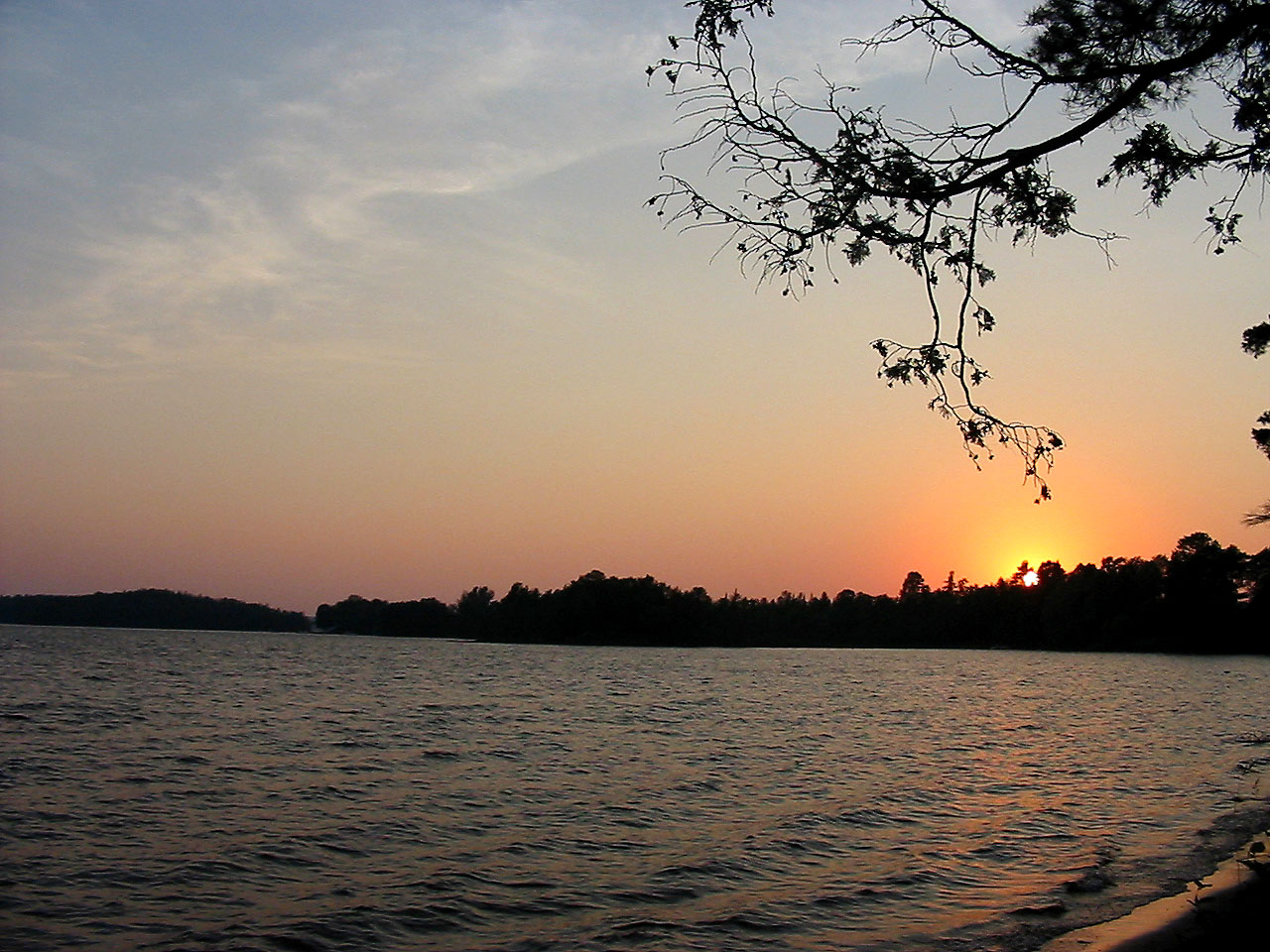
Golden Lake, Ontario, at sunset — regional waterway contextMathew Ingram, Golden Lake, Ontario, 24 June 2005; Flickr23649302 / Wikimedia Commons; CC BY 2.0.
The Algonquins of Pikwàkanagàn are an individually named Algonquin First Nation at Golden Lake and the Bonnechere River in Ontario. Its own public accounts connect land and water, cultural continuity and responsibilities to future generations. Begin with those community voices and the account of its cultural centre; detailed family and institutional histories remain open.
See each region’s evidence for historical or present-day scope.
Homeland / region
Ontario, Canada — listing address only
Research depth
Source guide
Source collection
2 annotated resources · 2 Indigenous-led
Inspected sources
2 substantive works · selected content reviewed
Initial adequacy
Still unfinished
Source review
October 27, 2026
Names & relationshipsListed as an Anishinabek Nation member First Nation. This is an organizational relationship; membership alone does not establish ethnicity, language, ancestry, citizenship, jurisdiction or representation of another named community.
A source guide for a deeper dive.This entry provides a brief orientation and an organized reading path. A comprehensive deep dive has not yet been completed. Follow the annotated sources and distinguish primary community accounts from outside reference material.
Still unfinished
A small, purposefully selected actual-content starting path and specifically scoped credited image are now available. Fuller history, source comparison and community review remain open; quantity does not establish completion.
Assessment recorded October 27, 2026. This is separate from research completion and community review.
Review community-directed family histories, original records and later institutional histories.
Assess the public language-learning materials themselves before describing their content or results.
Current legal instruments, membership, archaeological chronology and boundaries are not determined by these introductory pages.
Backdrop photographs & credits
These photographs have individual, documented connections to this entry. Their captions and source records define the people, place, object, and period shown; no one photograph represents every community within a broader label.
Golden Lake, Ontario, at sunset — regional waterway context Mathew Ingram, Golden Lake, Ontario, 24 June 2005; Flickr23649302 / Wikimedia Commons; CC BY 2.0.
Golden Lake is individually connected to Pikwàkanagàn by the First Nation’s own public location statement. This is a regional waterway illustration for that community and for the explicitly Pikwàkanagàn-focused Algonquin starting path. The camera shore is not established as reserve land; no exact community shoreline, territorial extent, cultural practice or every Algonquin community is inferred. Actual Commons file identification/date/creator/CC BY 2.0 and the historic Flickr licence review were read. The exact independently hosted Flickr original linked in that record was downloaded normally and its complete 1280×960 pixels visually inspected; Flickr HTML retrieval was unavailable, so a fresh direct Flickr licence inspection is not claimed. Parent imported the supplied complete JPEG unchanged; the recorded original/preview/earlier-derivative limits remain. CSS crops/overlays affect display only.
Image, association, and reuse record reviewed 2026-10-27.
Full photographs are displayed proportionally above. A translucent background copy may be cropped by the viewport; it does not replace the complete image or its record.
The visual treatment does not change the research status, evidence, or remaining gaps recorded in this profile.
Start reading here
A short starting path through selected actual-content works. Read each annotation for the specific community, period and inspection limits; this is not a complete history or community endorsement.
Learn about a specifically named community cultural and language institution.
These are selected starting points. The full annotated collection, source perspectives, inspection limits and remaining research questions follow below. A starting guide is not an exhaustive history or community endorsement.
01
A public account of history and responsibilities
The First Nation’s history explains an enduring relationship with land and water, the disruptions of colonization and the continuation of language and teachings. It presents balance, reciprocity and responsibilities to later generations as part of the community’s own account. The linked archaeological chronology and original encounter records were not checked here, so this introduction does not convert every date in the public summary into a separately verified finding.
The First Nation describes Omàmiwininì Pimàdjwowin as a cultural organization established in 2002 through consultation with members and Council. Its stated work includes protecting cultural traditions and teaching Algonquin language. This is a specific institutional route into public learning, not a separate tribal government or evidence of measurable language outcomes. Private materials and internal membership processes are outside this review.
Develop a community-directed history and annotated reading collection.
Review community-specific imagery and reuse terms before substantive profile publication.
Review detailed relationships, naming changes and historical regional connections.
Review community-directed family histories, original records and later institutional histories.
Assess the public language-learning materials themselves before describing their content or results.
Current legal instruments, membership, archaeological chronology and boundaries are not determined by these introductory pages.
Cohort06: selected actual-content sources and specifically scoped credited imagery form a bounded starting guide. Reused publications/photos are not new global works. Comprehensive history and community review remain open.
Follow the reading path
Sources & further reading
Open any title to read the original source. Annotations explain what each link can help you explore.
No Indigenous-led source is identified in this entry yet. This is a gap in this collection, and does not imply an absence of community knowledge or organization.
Indigenous-led / community-publishedAlgonquins of Pikwàkanagàn First NationSource 1
Publication: Undated; access date is not a publication date
A community-published introduction, with history and responsibilities explained in its own voice. Read alongside further historical records; this does not represent every Algonquin community.
Inspection: Content reviewed for the stated scope
Scope: Complete public historical body lines 55–59 read. Public self-description of land/water relationships, colonial disruption, continuity and responsibilities. Archaeological dates, the precise 1603 encounter attribution, present legal claims and the linked membership materials were not adopted.
Review recorded: October 27, 2026
Access note: Actual selected public content inspected without account or subscription; linked original records, media and cited publications remain outside this review unless expressly stated.
Publication: Undated; access date is not a publication date
Explains the named community’s cultural organization and its public language-preservation mission. A cultural corporation is not a separate people or government; stated aims are not evaluated outcomes.
Inspection: Content reviewed for the stated scope
Scope: Complete public substantive body lines 56–60 read, including its mission, the stated 2002 formation through community/council consultation and language teaching role. The charity register, internal records, teaching resources and linked centre website were not inspected.
Review recorded: October 27, 2026
Access note: Actual selected public content inspected without account or subscription; linked original records, media and cited publications remain outside this review unless expressly stated.